Screenshot 2024-07-05 112118

Mining & Mineral Processing Southern Africa

International Cyanide Management Code (ICMC) for Gold Processing Plants

Online technical support and coaching

Join Our Whatsapp Group
Join Us on Facebook
Join us on Linkedin
International Cyanide Management Code (ICMC) for Gold Processing Plants
The International Cyanide Management Code (ICMC) provides a globally recognised framework for the safe and responsible use of cyanide in gold processing plants. From cyanide transportation, storage and handling to leaching operations, worker protection, environmental management and emergency preparedness, the Code promotes practices that reduce risks to people and the environment. For gold processing operations using CIL, CIP and heap leaching technologies, implementing the Cyanide Code goes beyond regulatory compliance. It strengthens operational discipline, improves safety awareness, supports environmental stewardship and promotes accountability throughout the cyanide management lifecycle. This article explores the nine principles of the International Cyanide Management Code, their practical application in gold processing plants and the essential controls required to build safer, more responsible and sustainable gold recovery operations.

International Cyanide Management Code (ICMC) for Gold Processing Plants

I


The International Cyanide Management Code (ICMC), commonly called the Cyanide Code, is an internationally recognised voluntary programme for managing cyanide safely in gold and silver mining and processing operations. It is administered by the International Cyanide Management Institute (ICMI). For a gold processing plant using sodium cyanide (NaCN) in leaching, adsorption, elution or related operations, the Code provides a framework for protecting workers, communities and the environment throughout the cyanide management lifecycle. The Code is particularly relevant to plants operating CIL (Carbon-in-Leach), CIP (Carbon-in-Pulp), heap leaching and other cyanidation processes.

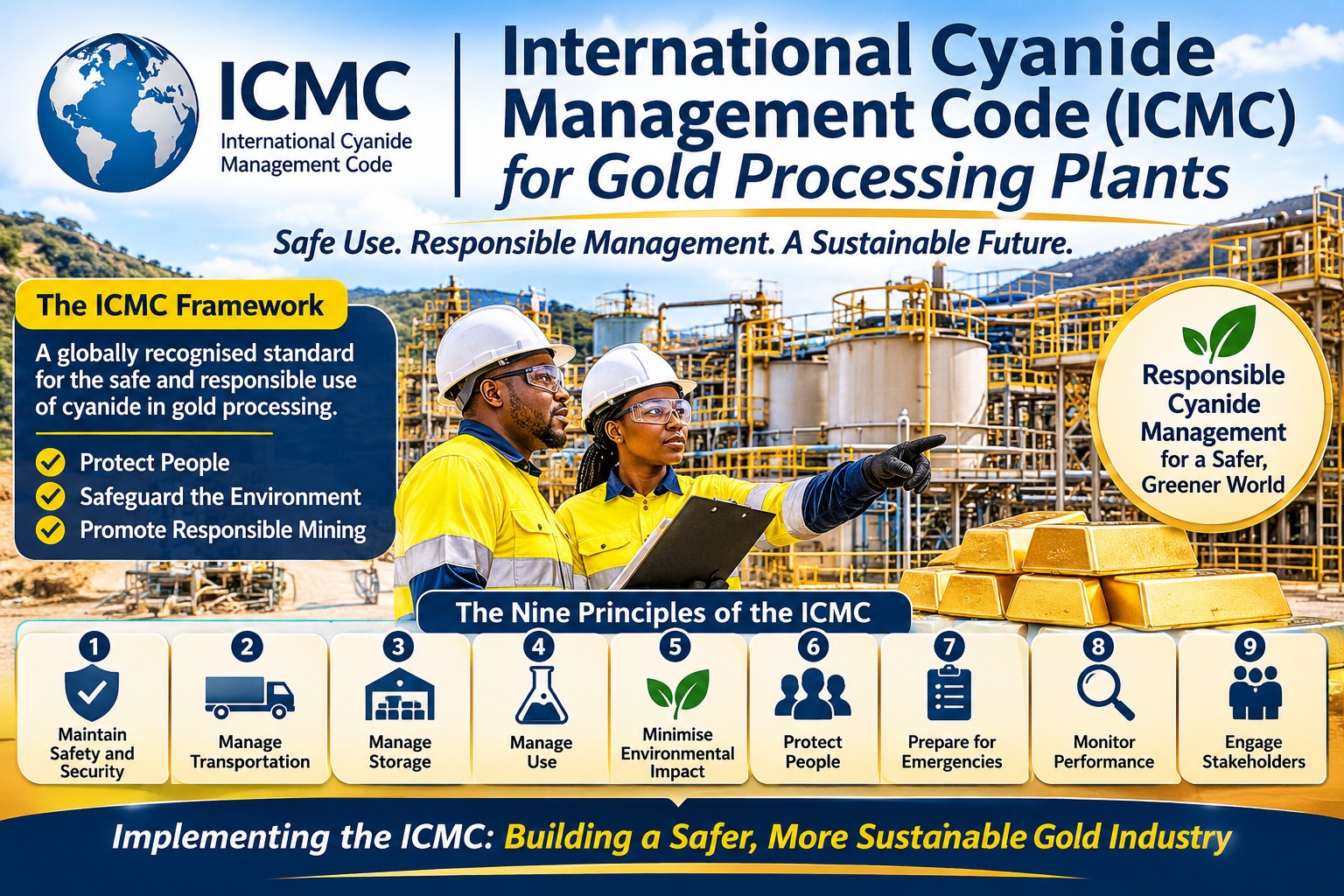
1. The nine principles of the Cyanide Code


The Code establishes nine core principles for gold and silver mining operations. Principle Application in a gold processing plant

1. Production Purchase cyanide from manufacturers operating under appropriate responsible-management practices

2. Transportation Ensure cyanide is transported safely from supplier to plant

3. Handling and Storage Safely receive, unload, store, mix and handle cyanide

4. Operations Manage process solutions, equipment and waste facilities to protect people and the environment

5. Decommissioning Plan for safe closure and decontamination of cyanide facilities

6. Worker Safety Protect employees against cyanide exposure

7. Emergency Response Prepare for and respond to cyanide-related emergencies

8. Training Train personnel to handle cyanide and respond to incidents

9. Dialogue and Disclosure Communicate relevant cyanide management information to stakeholders

These principles are supported by specific Standards of Practice and detailed verification requirements.

2. Practical application in a gold processing plant
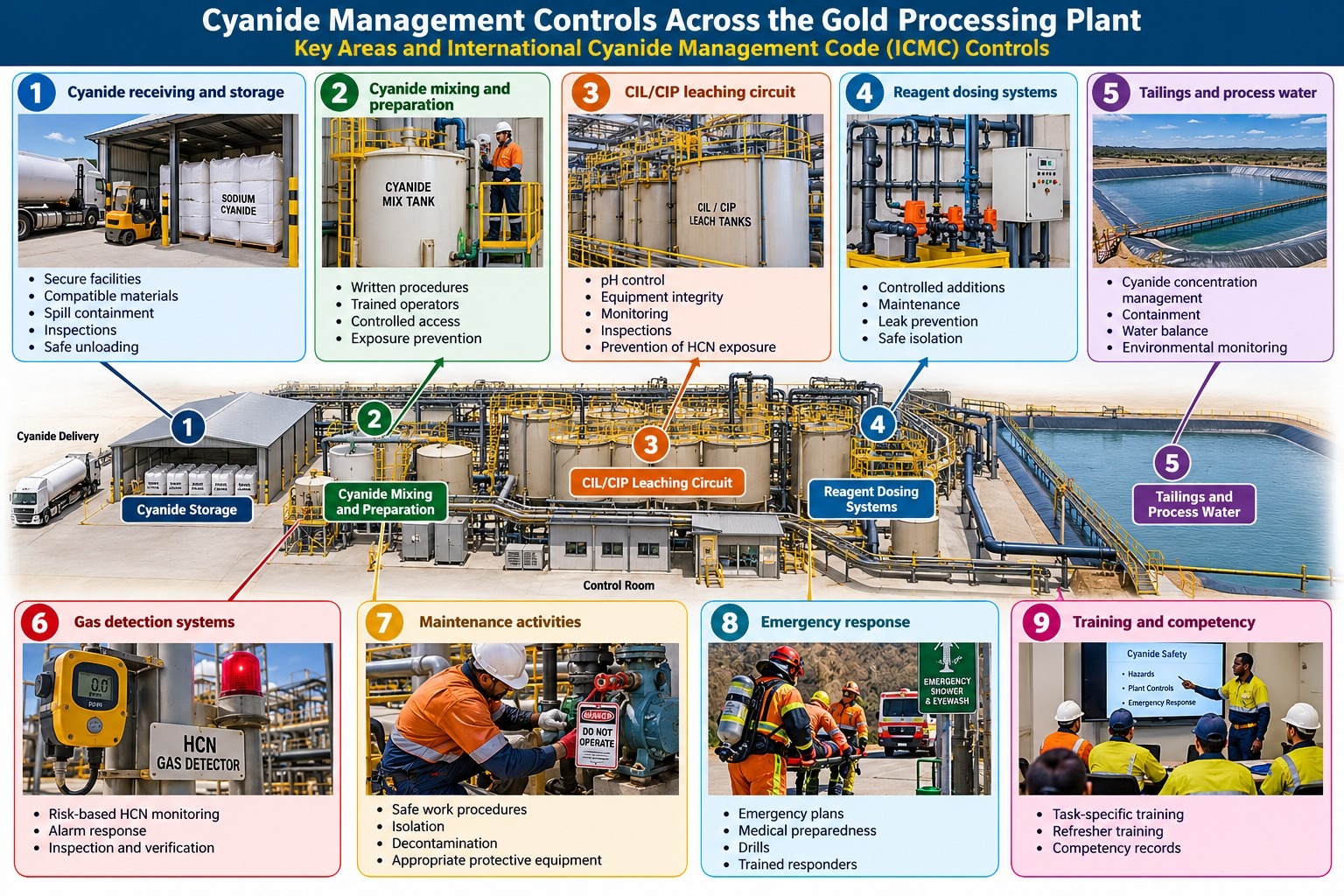

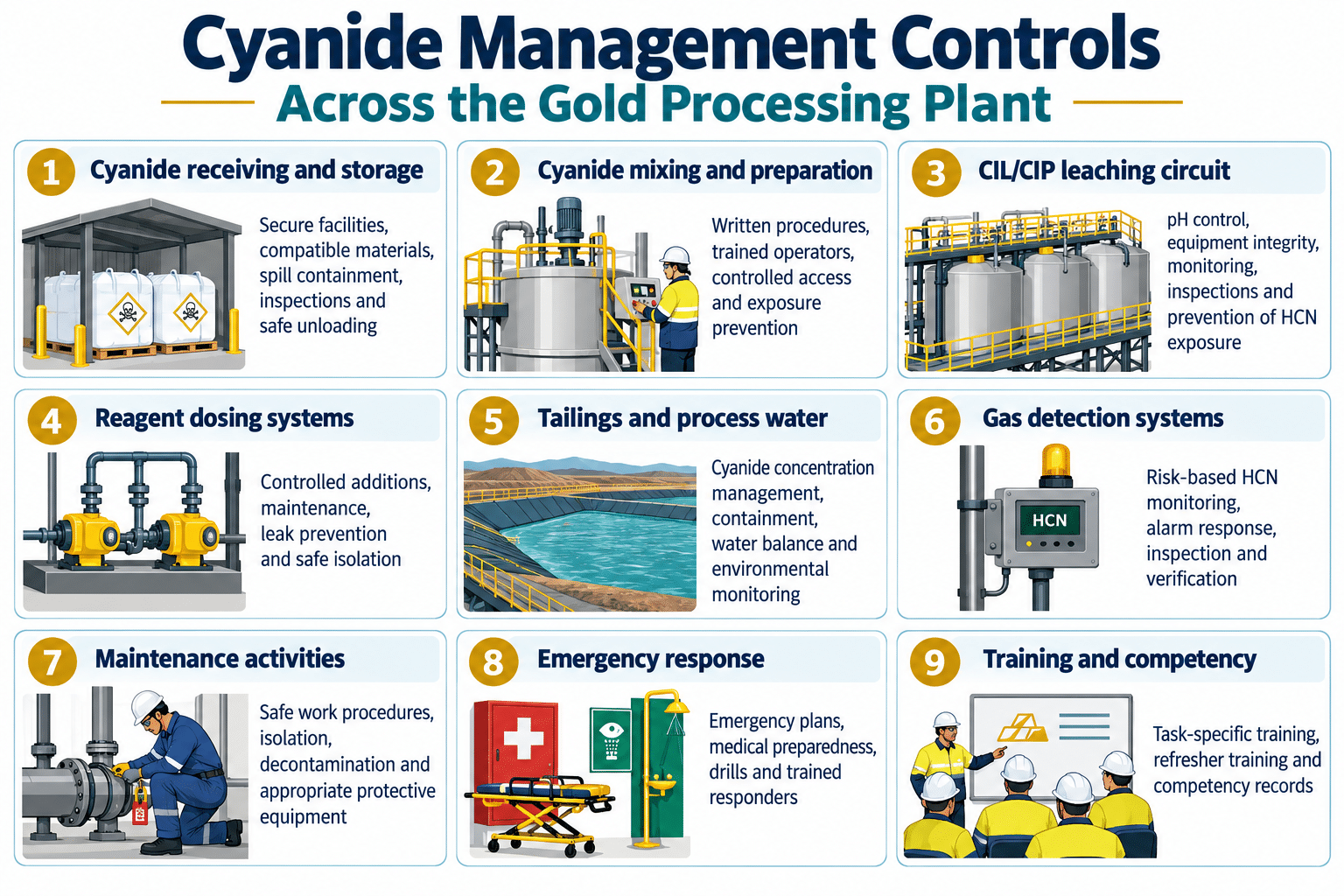
The most directly relevant requirements for plant operators, metallurgists, supervisors and safety personnel are:
Cyanide Management Across Gold Processing Plant

3. Cyanide Code requirements


exec-0cf065b1-8918-475f-ae01-4e83e893d460

4. Certification and auditing 


The Cyanide Code is voluntary, but participating companies commit to independent verification of their designated operations.

1. Become a signatory. The company joins the Cyanide Code programme.

2. Conduct a gap assessment. Compare plant practices, infrastructure and records against the Mining Operations Verification Protocol.

3. Implement improvements. Address deficiencies in cyanide management, worker protection, emergency preparedness and documentation.

4. Undergo independent audit. Qualified third-party auditors inspect facilities, review records and interview personnel.

5. Maintain certification. Certified operations undergo recertification audits at three-year intervals, with corrective actions where required.

5. South African regulatory consideration


For gold processing plants operating in South Africa, the Cyanide Code complements rather than replaces applicable legal requirements. South Africa also has a Guideline for a Mandatory Code of Practice for Cyanide Management under the Mine Health and Safety Act framework. The guideline explicitly references alignment with the International Cyanide Management Code. Its applicability to a particular plant should be confirmed based on the facility's legal and operational status.

6. Official reference documents


The following ICMI resources are particularly useful for developing plant procedures, training manuals and audit checklists:

International Cyanide Management Code — Principles and Standards of Practice

Guidance for Use of the Mining Operations Verification Protocol (PDF)

Certification requirements and audit process

Recommendation for training programme: Incorporate the applicable Cyanide Code Standards of Practice into each training session, supported by site-specific SOPs, inspection checklists, emergency procedures and competency assessments. This will make the programme more useful for operational safety and future Cyanide Code audit preparation.


Cyanide Management Code (ICMC) for Gold Processing Plants

PDF Download Here

Critical chemical and Process Training for Gold Processing Plants

Cyanide training module 6 Gas Alarm Recognition and Response

Follow by Email
LinkedIn
Share
URL has been copied successfully!