
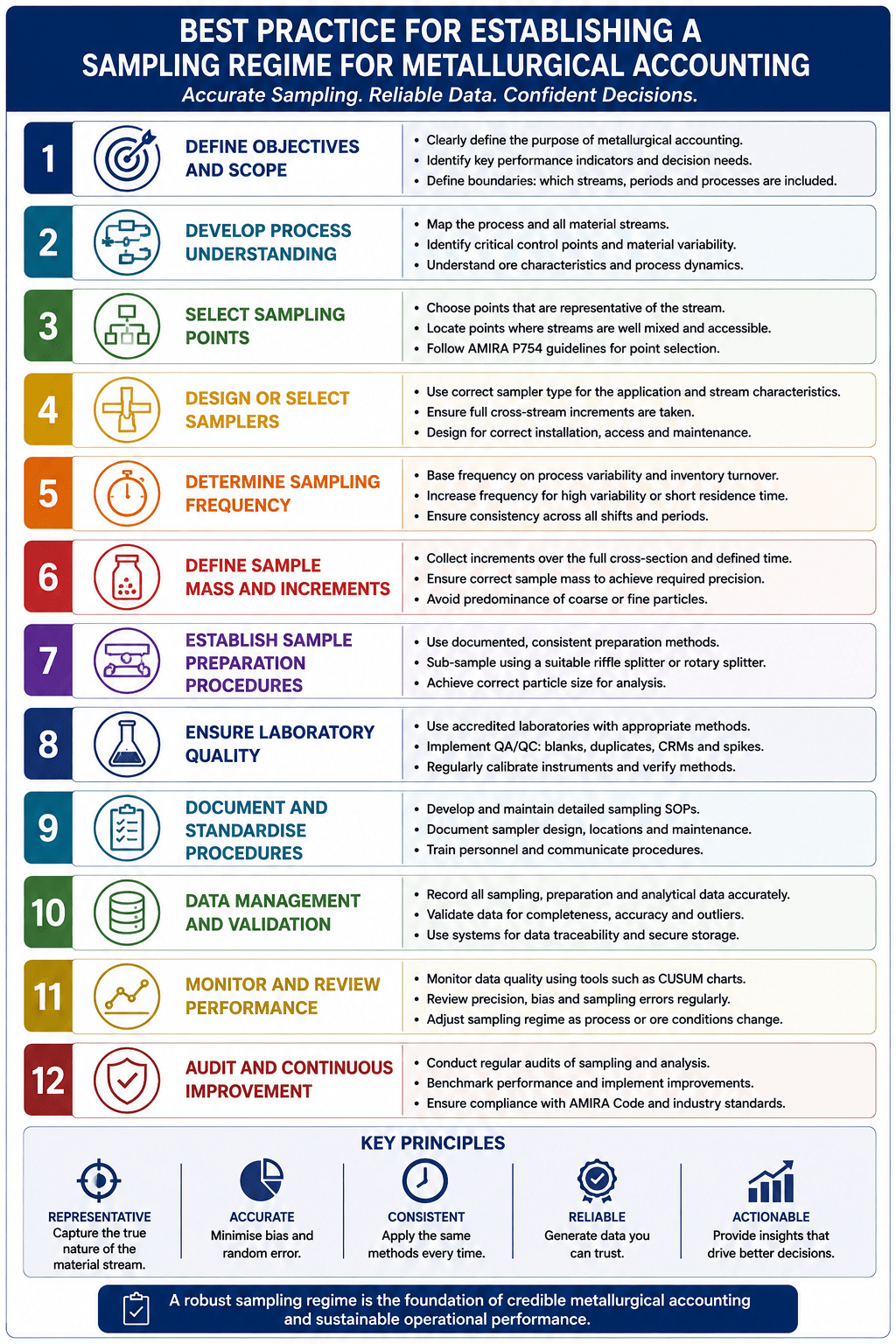
Best Practice for Sampling and Analysis for Metallurgical Accounting
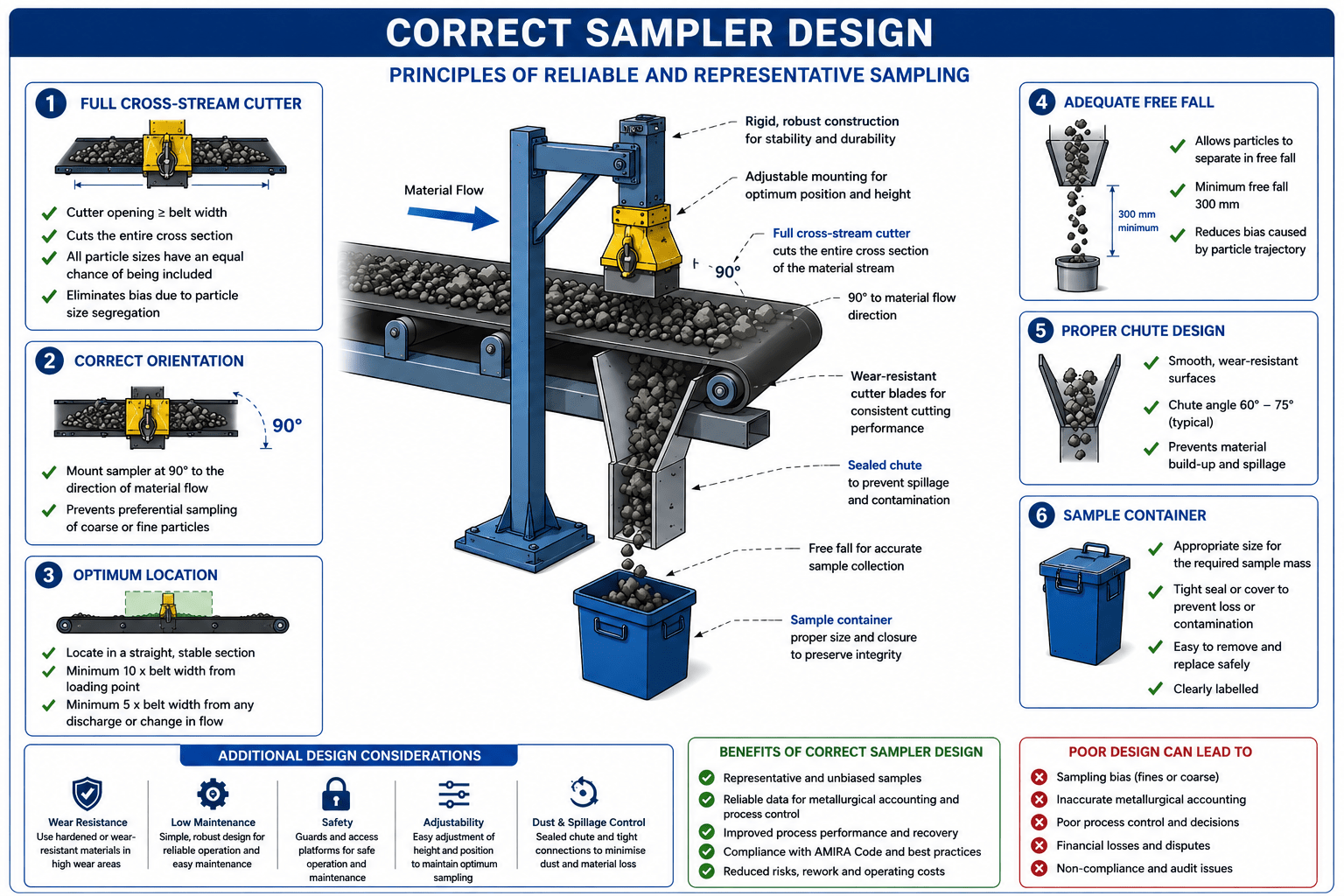
Sampling and analysis are the foundation of an effective metallurgical accounting system. Even the most sophisticated accounting software cannot compensate for poor sampling or inaccurate laboratory results. The objective is to ensure that every reported grade, moisture content, metal content, and tonnage accurately represents the true characteristics of the material being measured. Best practice is based on representative sampling, rigorous quality assurance, standardized laboratory procedures, and continuous performance monitoring in accordance with the **AMIRA P754 Code of Practice for Metal Accounting** and the **Theory of Sampling (TOS)**.
### 1. Develop a Representative Sampling Strategy
* Define the objectives of the sampling programme.
* Identify all metallurgical accounting balance points.
* Select sampling locations where the material stream is well mixed.
* Ensure every particle has an equal probability of being selected.
* Design the sampling programme around ore variability and process fluctuations.
### 2. Install Proper Mechanical Samplers Mechanical samplers should:
* Cut the full cross-section of the material stream.
* Collect increments at fixed time or mass intervals.
* Operate automatically without operator bias.
* Be installed where flow conditions are stable.
* Minimize contamination and sample loss. Avoid:
* Hand scooping from conveyor belts
* Grab sampling from stockpiles
* Sampling from stagnant launders
* Sampling only surface material
### 3. Follow Correct Sampling Frequency Sampling frequency should depend on:
* Process variability
* Throughput
* Ore type
* Residence time
* Production requirements Typical practice includes:
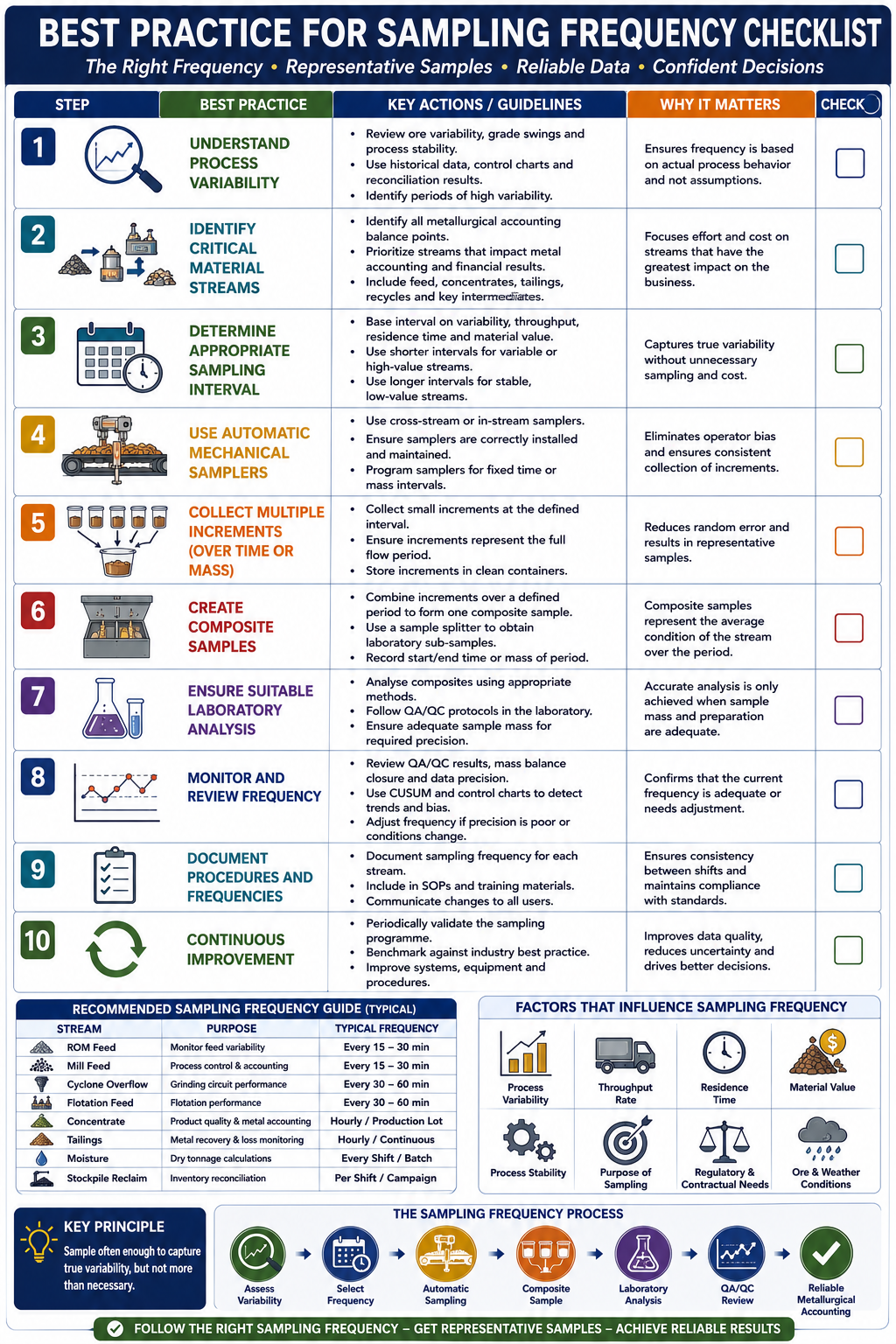
* Feed streams: every 15–30 minutes
* Concentrates: hourly or by production lot
* Tailings: continuous or hourly
* Moisture samples: every shift or every batch
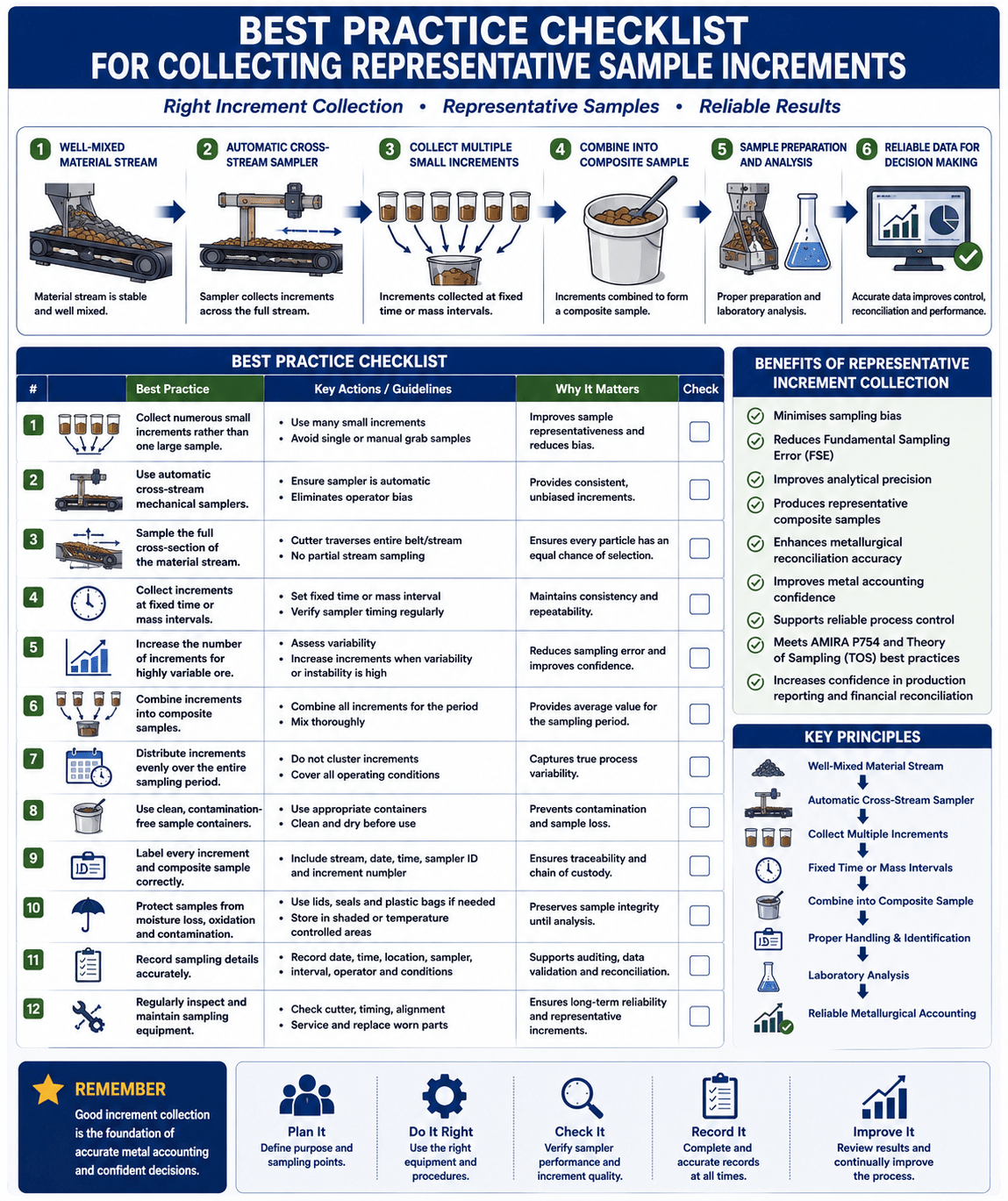
### 4. Collect Representative Sample Increments Rather than collecting one large sample:
* Collect many small increments.
* Combine increments into one composite sample.
* Cover the complete sampling period.
* Ensure sufficient sample mass for the required precision. This minimizes both bias and random sampling error.
### 5. Apply Correct Sample Preparation Procedures Sample preparation should be standardized by:
* Drying at controlled temperatures
* Crushing using calibrated equipment
* Pulverising to the specified particle size
* Splitting using rotary or riffle splitters
* Avoiding contamination between samples Each reduction stage should preserve sample representativity.
### 6. Maintain High Laboratory Standards The laboratory should implement:
* ISO 17025 quality systems
* Instrument calibration
* Certified Reference Materials (CRMs)
* Duplicate analyses
* Blank samples
* Check samples
* Replicate testing
* Standard operating procedures Laboratory bias should be routinely monitored.
### 7. Monitor Analytical Performance Quality control tools include:
* CUSUM charts
* Shewhart Control Charts
* Precision Control Charts
* Duplicate precision analysis
* CRM recovery charts
* Bias monitoring
* Inter-laboratory comparisons
These techniques detect gradual deterioration before significant errors occur.
### 8. Maintain Complete Sample Traceability Every sample should have:
* Unique identification
* Sampling location
* Date and time
* Sampler identification
* Sample preparation record
* Laboratory record
* Analytical results
* Storage history
This ensures complete auditability.
### 9. Perform Regular Sampling Audits
Routine audits should verify:
* Sampler design
* Cutter dimensions
* Cutter speed
* Cutter alignment
* Increment timing
* Sample recovery
* Equipment wear
* Compliance with sampling procedures
Audits should be scheduled at least annually or after major plant modifications.
### 10. Validate Metallurgical Accounting Data
Validation should include:
* Mass balance reconciliation
* Metal balance closure
* Comparison with historical trends
* Statistical analysis
* Identification of outliers
* Investigation of unexplained losses
* Review of laboratory precision
Unexpected deviations should always be investigated.
### 11. Ensure Competent Personnel
Personnel involved in sampling should receive training in:
* Theory of Sampling (TOS)
* Sample handling
* QA/QC procedures
* Safety requirements
* Laboratory practices
* Data recording
* Equipment inspection Regular competency assessments help maintain consistency.
### 12. Drive Continuous Improvement
A robust sampling system should include:
* Routine performance reviews
* Root cause analysis of discrepancies
* Calibration programmes
* Equipment maintenance
* Updated SOPs
* Process optimization
* Adoption of new technologies such as automated samplers, online analysers, and digital data acquisition systems
--- ## Key Principles of Best Practice
**Representative Sampling**
→ **Proper Sampler Design**
→ **Standardised Sample Preparation**
→ **Accurate Laboratory Analysis**
→ **Quality Assurance & Quality Control (QA/QC)**
→ **Data Validation**
→ **Mass Balance Reconciliation**
→ **Continuous Monitoring (CUSUM & Control Charts)**
→ **Regular Audits**
→ **Continuous Improvement**
### Benefits of Best Practice
* Improved metallurgical accounting accuracy
* Better plant reconciliation
* Reduced sampling bias
* Lower analytical uncertainty
* Early detection of laboratory problems
* Greater confidence in production reporting
* Improved financial accountability
* Compliance with the AMIRA P754 Code of Practice
* Enhanced process control and operational decision-making
* Increased stakeholder confidence in reported production figures
Develop a Representative Sampling Strategy
A representative sampling strategy is the cornerstone of reliable metallurgical accounting. The objective is to ensure that every sample accurately reflects the composition of the entire material stream, allowing mass balances, metal accounting, and plant performance calculations to be based on dependable data. Poor sampling introduces bias that cannot be corrected by sophisticated laboratory analysis or reconciliation techniques.
Therefore, sampling systems should be designed according to the **Theory of Sampling (TOS)** and the principles outlined in the **AMIRA P754 Code of Practice for Metal Accounting**.
Before implementing a sampling programme, clearly define its purpose. Sampling may be required for metallurgical accounting, process control, product quality assurance, environmental compliance, or reconciliation. Each objective influences the required sampling frequency, precision, accuracy, and analytical methods.
Understanding the purpose ensures that the sampling programme delivers data suitable for decision-making without unnecessary cost. A detailed understanding of the process is essential. Develop a complete process flow diagram identifying all material streams entering, circulating within, and leaving the plant.
Critical sampling locations typically include:
* ROM ore feed
* Crusher product
* Mill feed
* Cyclone overflow and underflow
* Flotation feed, concentrate, and tailings
* Thickener feed and overflow
* Filter cake
* Final concentrate
* Tailings discharge
* Stockpile reclaim streams Each sampling point should represent a well-mixed material stream and coincide with a metallurgical accounting balance point.
Material variability must also be considered during strategy development.
Ore characteristics often change with mining location, lithology, weathering, particle size distribution, moisture content, and mineralogy.
Sampling frequency should increase when variability is high to capture these fluctuations accurately.
Composite sampling over suitable time intervals can further improve representativeness by reducing the influence of short-term process variations.
Sampling locations should be selected where the material stream is stable and accessible.
For slurry streams, vertical pipes with turbulent flow generally provide the best conditions for representative sampling.
Conveyor belt cross-stream samplers are preferred for dry solids because they collect the entire cross-section of the stream.
Grab samples from stockpiles, bins, or conveyor surfaces should be avoided wherever possible because they frequently introduce significant bias. The sampling strategy should also define the sampling frequency and increment collection method.
Rather than relying on a single large sample, collect numerous small increments at fixed mass or time intervals and combine them into a composite sample.
This approach reduces both random error and fundamental sampling error while improving statistical confidence in the analytical results.
Finally, the sampling strategy should be fully documented in a formal Sampling Protocol or Standard Operating Procedure (SOP).
The document should define sampling locations, equipment specifications, sampling frequency, increment size, sample preparation methods, laboratory analysis procedures, QA/QC requirements, responsibilities, and reporting procedures. Regular audits and reviews should be conducted to ensure the strategy continues to meet operational requirements as ore characteristics, production rates, and plant configurations change. ### Best Practice Checklist for Developing a Representative Sampling Strategy
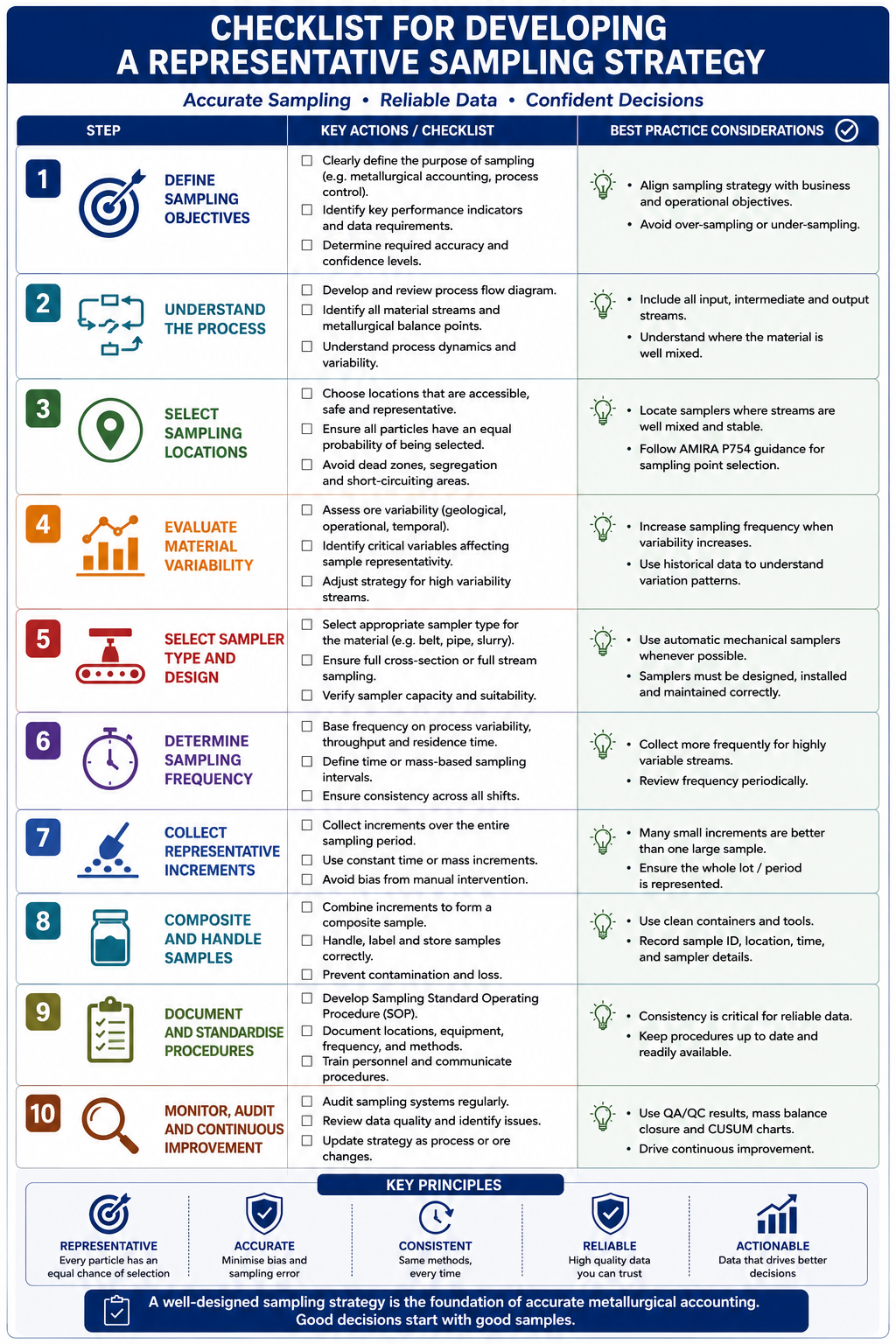
Install Proper Mechanical Samplers
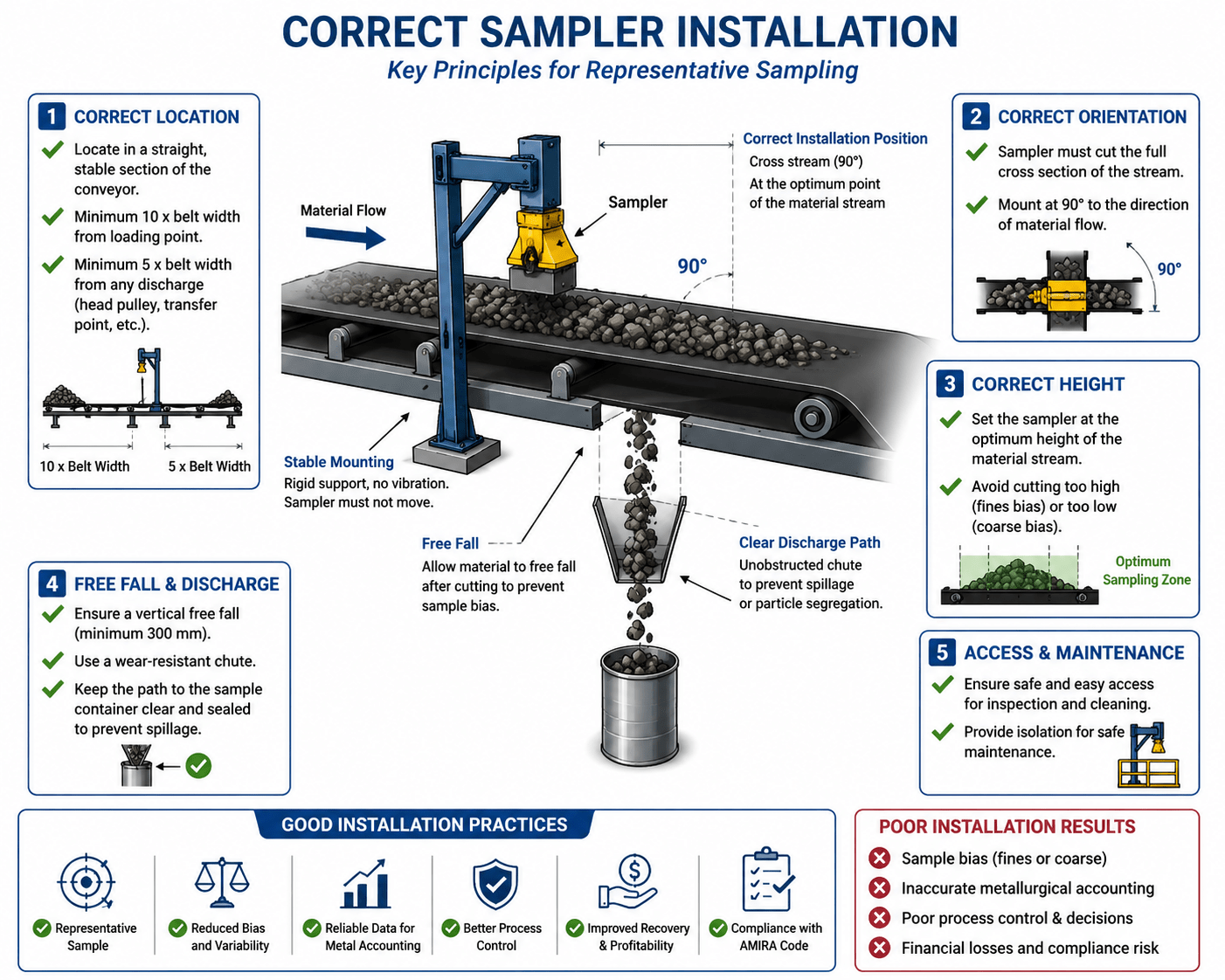
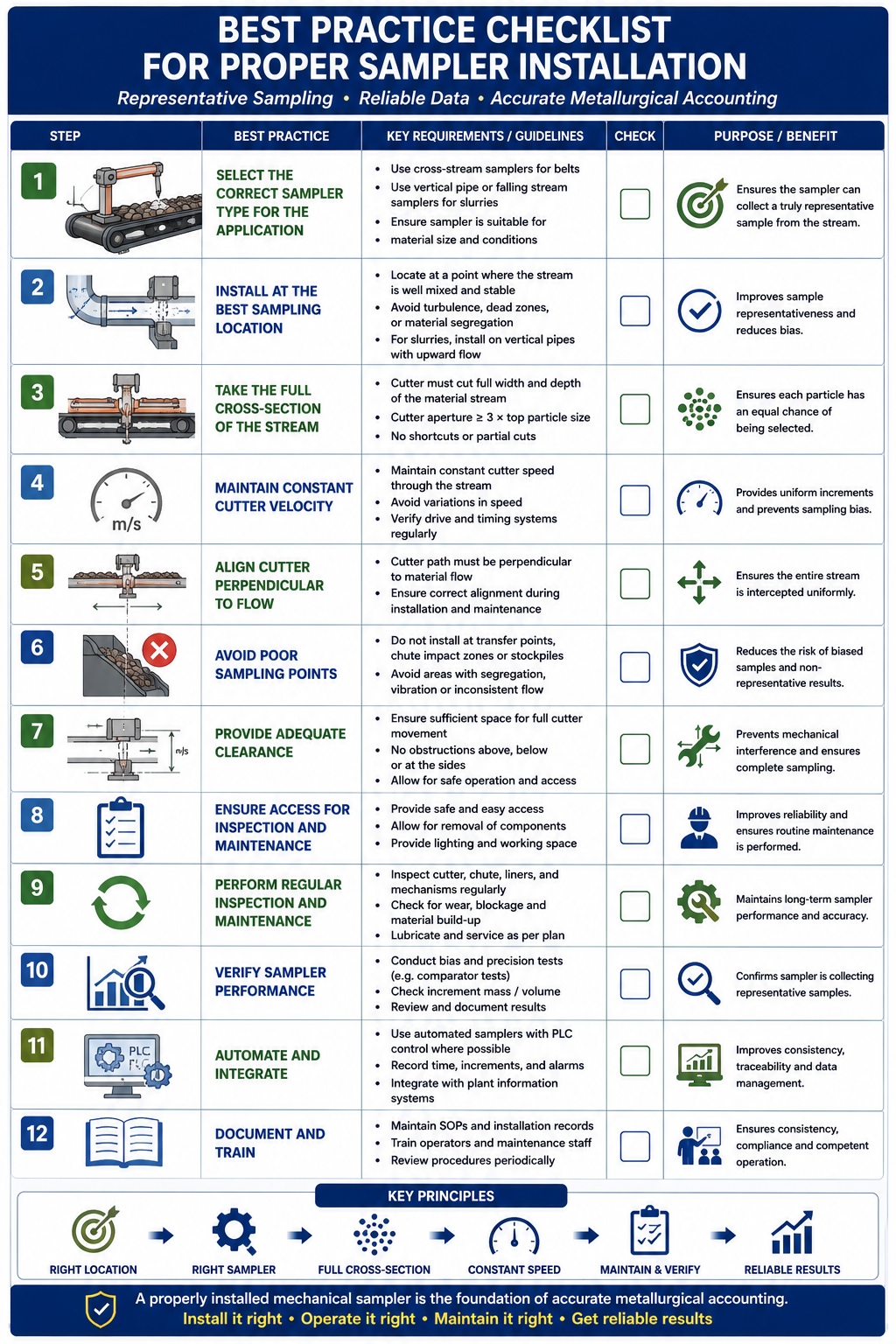
The installation of properly designed mechanical samplers is one of the most critical requirements for achieving accurate and unbiased metallurgical accounting.
Even if sampling locations are correctly selected and laboratory procedures are robust, poor sampler design or incorrect installation can introduce significant bias that cannot be corrected later in the analytical process. Mechanical samplers should therefore be designed and installed in accordance with the **Theory of Sampling (TOS)** and the recommendations of the **AMIRA P754 Code of Practice for Metal Accounting**.
The primary objective of a mechanical sampler is to ensure that every particle in the material stream has an equal probability of being selected. This is achieved by collecting a complete cross-section of the stream rather than only a portion of it.
Cross-stream sampling minimizes particle size segregation bias and provides a truly representative sample of the material being processed. For conveyor belt applications, the sampler cutter should traverse the entire width and depth of the material stream at a constant speed.
The cutter aperture should be sufficiently wide to accommodate the largest particle size without causing blockage or particle rejection.
Cutters that are too narrow can selectively exclude coarse particles, resulting in significant sampling bias.
For slurry applications, mechanical samplers should be installed on vertical pipelines or free-falling streams where the slurry is fully mixed and flowing turbulently. Sampling from horizontal pipes, dead zones, or partially filled launders should be avoided because particle settling and segregation can produce non-representative samples.
Correct installation is equally important. Samplers should be positioned where the material stream is stable, accessible for maintenance, and free from excessive vibration or turbulence.
Adequate clearance should be provided to allow the cutter to pass completely through the material stream without obstruction. Cutter paths should be aligned perpendicular to the direction of material flow to ensure the entire stream is intercepted uniformly.
Routine inspection and maintenance are essential to sustain sampler performance. Cutter edges should be inspected for wear, actuators and drive systems should be serviced regularly, and timing mechanisms should be verified to ensure consistent sampling intervals. Blockages, material build-up, or mechanical failures should be corrected immediately, as these conditions can introduce systematic errors into metallurgical accounting. Modern mineral processing plants increasingly employ automated mechanical sampling systems integrated with programmable logic controllers (PLCs) and plant information systems. Automated samplers improve repeatability, eliminate operator bias, provide consistent sampling frequencies, and facilitate real-time data acquisition for metallurgical accounting and process control.
### Key Principles +
**Well-Mixed Material Stream**
→ **Correct Sampler Location**
→ **Proper Mechanical Sampler Design** +
→ **Full Cross-Stream Cutter**
→ **Constant Cutter Speed**
→ **Representative Sample Collection**
→ **Routine Maintenance & Performance Testing**
→ **Reliable Metallurgical Accounting**
By following these best practices, mechanical samplers become a reliable source of representative samples, supporting accurate metal accounting, improved process control, regulatory compliance, and confident operational decision-making.
Follow Correct Sampling Frequency
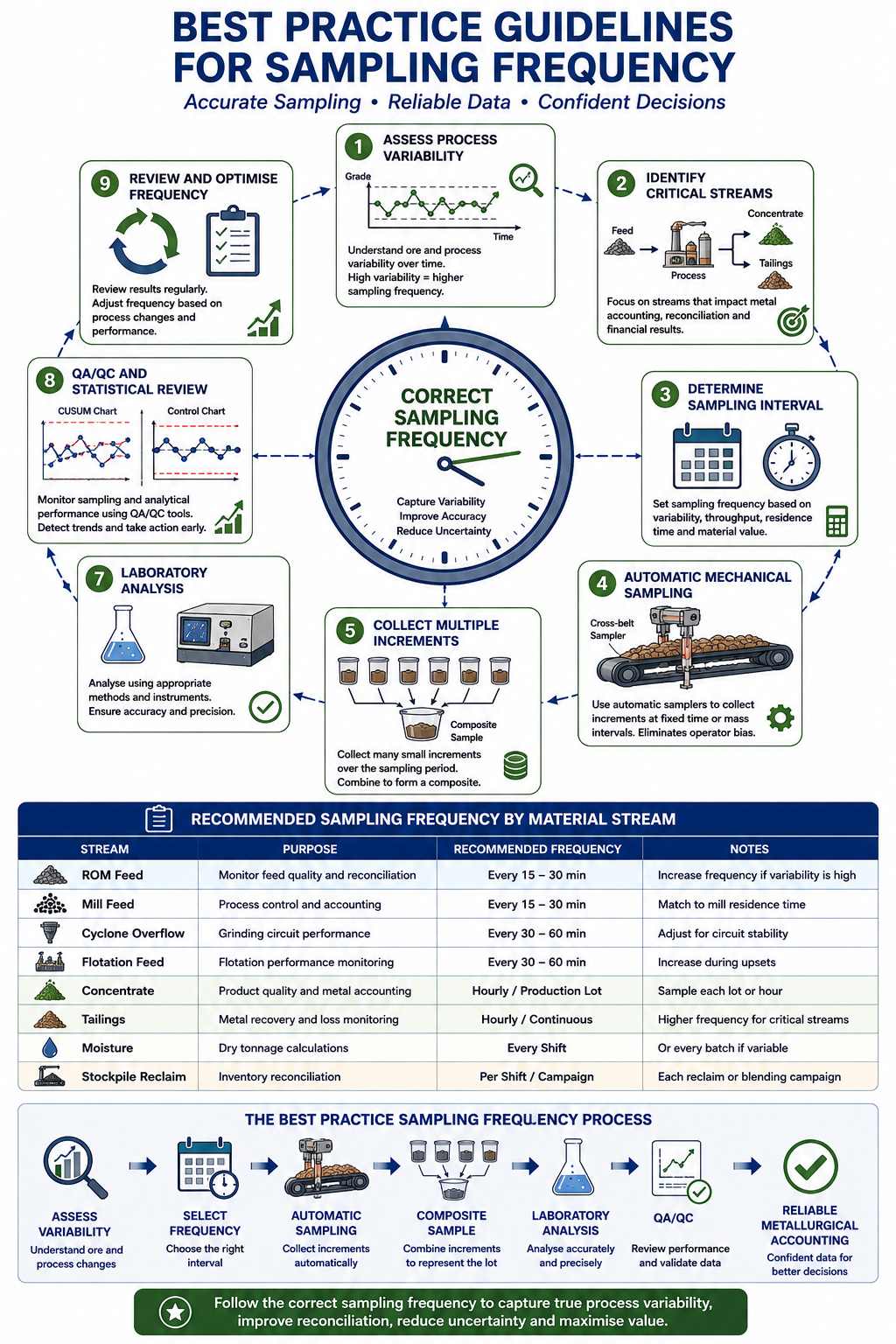
Determining the correct sampling frequency is essential for producing reliable metallurgical accounting data. Sampling too infrequently may fail to capture changes in ore grade, mineralogy, or process performance, leading to inaccurate mass balances and poor operational decisions.
Conversely, excessive sampling increases laboratory workload, costs, and data management complexity without necessarily improving data quality. The objective is to establish a sampling frequency that accurately reflects process variability while balancing operational efficiency and analytical costs.
The appropriate sampling frequency depends on several factors, including process variability, production rate, residence time, material value, and the purpose of the sampling programme.
Highly variable ore bodies or rapidly changing processing conditions require more frequent sampling than stable operations.
Likewise, high-value concentrate streams often justify more frequent sampling than low-value waste streams due to the greater financial impact of measurement uncertainty.
A risk-based approach should be adopted when determining sampling frequency. Critical metallurgical accounting streams, such as plant feed, concentrate, and final tailings, should receive higher sampling priority because they directly influence metal accounting, reconciliation, and financial reporting. Intermediate process streams may be sampled less frequently unless they are used for process control or troubleshooting. Sampling should be conducted at fixed mass or time intervals to ensure consistency and eliminate operator bias.
Automated mechanical samplers are preferred because they collect representative increments continuously or at predetermined intervals without manual intervention.
Composite samples should be created by combining multiple increments collected over a defined period, reducing the influence of short-term fluctuations and improving sample representativeness.
Sampling frequency should not remain static throughout the life of a plant. It should be reviewed regularly based on changes in ore characteristics, mining areas, throughput, process stability, equipment performance, and reconciliation results.
Statistical analysis of historical data can help determine whether sampling intervals should be increased or reduced while maintaining the desired level of confidence in metallurgical accounting.
### Key Principles
**Assess Process Variability**
→ **Identify Critical Material Streams**
→ **Determine Appropriate Sampling Interval**
→ **Use Automatic Mechanical Sampling**
→ **Collect Composite Samples**
→ **Review Statistical Performance**
→ **Adjust Frequency as Conditions Change**
→ **Maintain Accurate Metallurgical Accounting**
Following the correct sampling frequency ensures that metallurgical accounting data remain representative, statistically reliable, and suitable for production reporting, process optimisation, financial reconciliation, and compliance with the **AMIRA P754 Code of Practice**.
Collect Representative Sample Increments
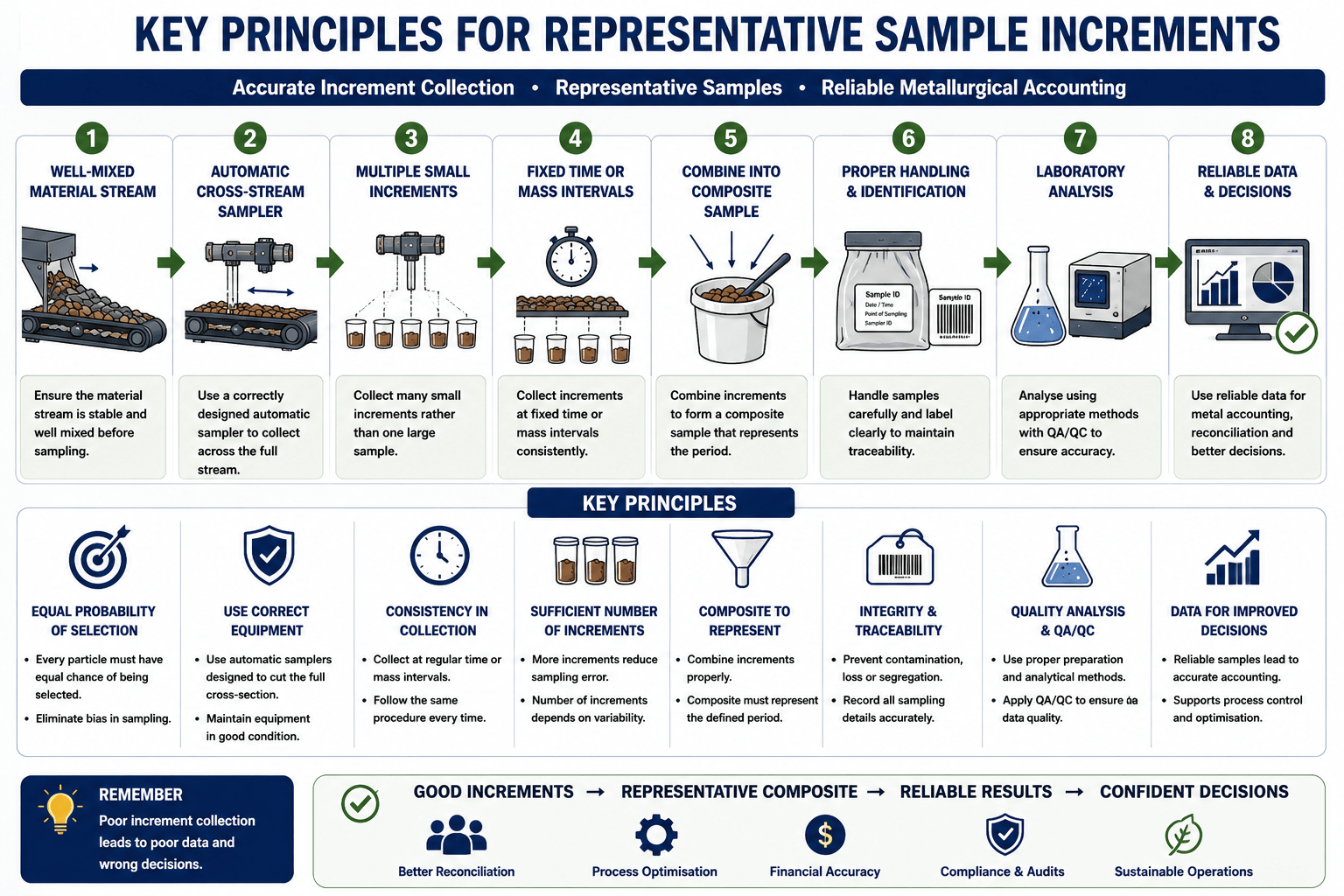
Collecting representative sample increments is one of the most important steps in obtaining reliable metallurgical accounting data. A single large sample collected at one point in time rarely represents the true composition of an ore or process stream because mineral processing streams are inherently variable.
Changes in ore grade, particle size distribution, moisture content, mineralogy, and process conditions occur continuously throughout production.
To minimise these sources of error, a representative sample should be formed by combining numerous small increments collected over a defined period or mass of material.
According to the **Theory of Sampling (TOS)**, every particle in the material stream must have an equal probability of being selected.
This is achieved by collecting increments using properly designed automatic mechanical samplers that intercept the entire cross-section of the material stream at predetermined time or mass intervals. Manual grab sampling should be avoided wherever possible because it is prone to operator bias and seldom produces representative results. The number and size of sample increments should be determined by the variability of the material and the required level of confidence in the analytical results. Highly variable ore bodies or unstable processing conditions require a greater number of increments than relatively homogeneous materials. Increasing the number of increments generally reduces the Fundamental Sampling Error (FSE) and improves the precision of metallurgical accounting. Individual increments should be combined into a composite sample that represents the average characteristics of the material processed during the sampling period.
Composite sampling smooths out short-term fluctuations in grade and mineralogy, providing more reliable data for reconciliation, recovery calculations, and production reporting.
Care should be taken to ensure that increments are collected uniformly throughout the sampling period rather than clustering samples during convenient operating conditions.
Proper handling of sample increments is equally important. Samples should be transferred into clean, clearly labelled containers immediately after collection to prevent contamination, moisture loss, oxidation, or material segregation. The chain of custody should be maintained throughout transport, preparation, and laboratory analysis to ensure complete traceability.
Modern mineral processing plants often automate increment collection using programmable mechanical samplers integrated with plant control systems.
Automated sampling provides consistent timing, eliminates operator bias, improves repeatability, and facilitates continuous data collection for metallurgical accounting and process optimisation.
--- ### Benefits of Representative Sample Increment Collection
* Minimises sampling bias
* Reduces Fundamental Sampling Error (FSE)
* Improves analytical precision
* Produces representative composite samples
* Enhances metallurgical reconciliation accuracy
* Improves metal accounting confidence
* Supports reliable process control
* Meets AMIRA P754 and Theory of Sampling (TOS) best practices
* Increases confidence in production reporting and financial reconciliation
Apply Correct Sample Preparation Proceduresg
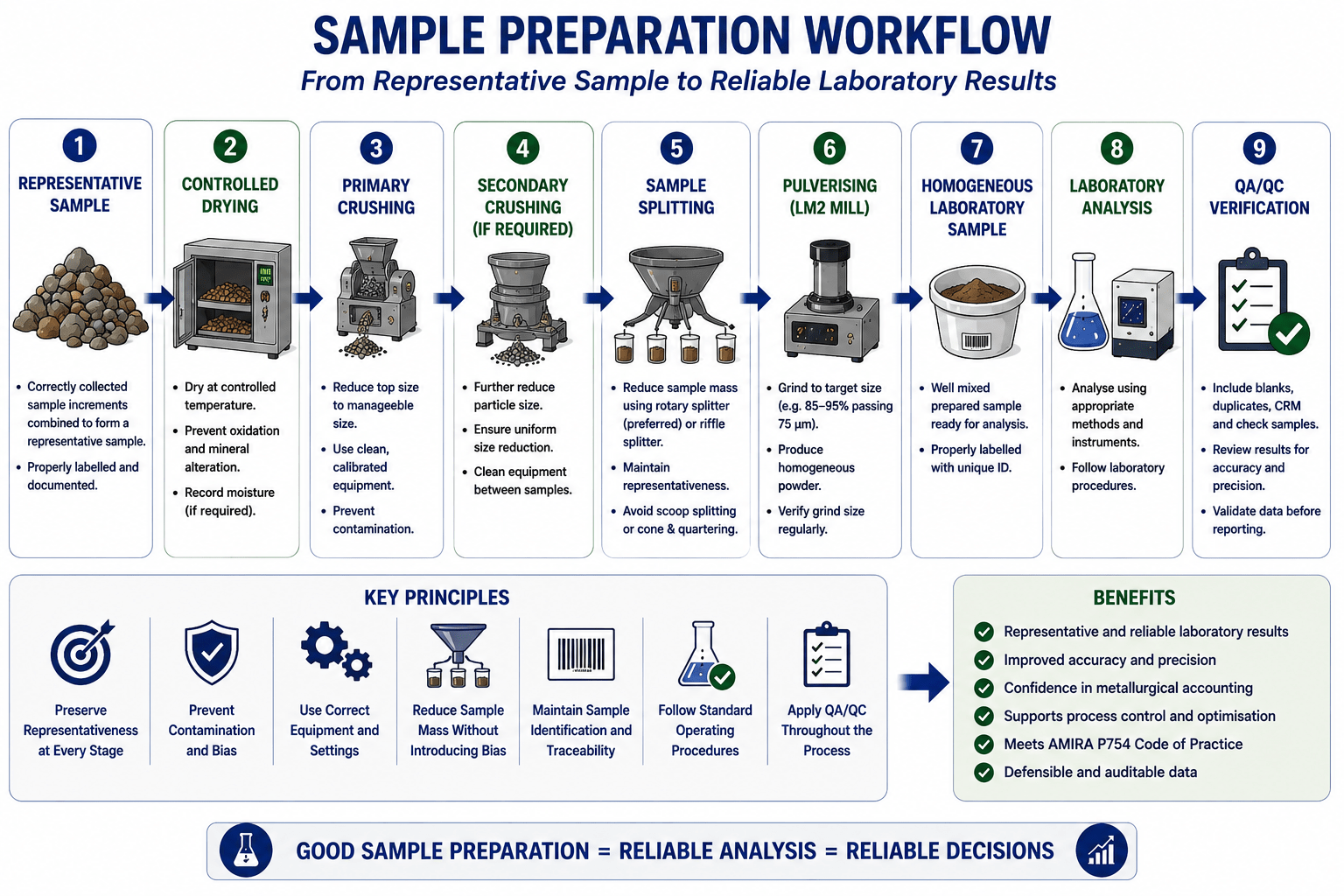
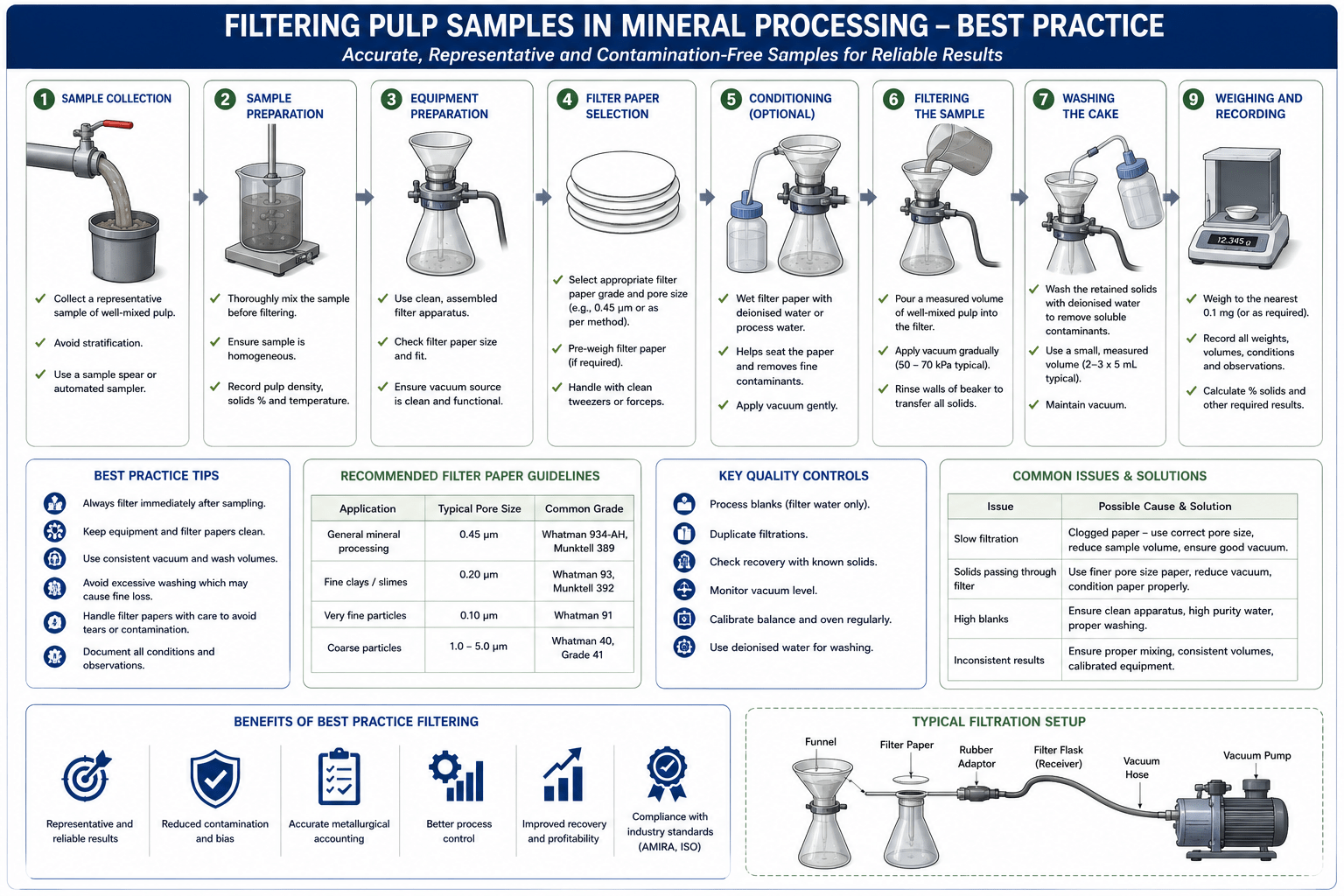
Correct sample preparation is essential for preserving the representativeness of a sample after it has been collected.
Even when sampling is performed correctly, poor sample preparation can introduce contamination, segregation, moisture loss, particle size bias, or analytical errors that compromise metallurgical accounting.
The objective of sample preparation is to reduce the size and mass of the sample while maintaining its original composition, ensuring that the laboratory receives a representative sub-sample for analysis.
Sample preparation should follow documented Standard Operating Procedures (SOPs) based on the **Theory of Sampling (TOS)** and the **AMIRA P754 Code of Practice for Metal Accounting**.
Every stage—from drying and crushing to pulverising and splitting—must minimise bias and preserve the integrity of the sample.
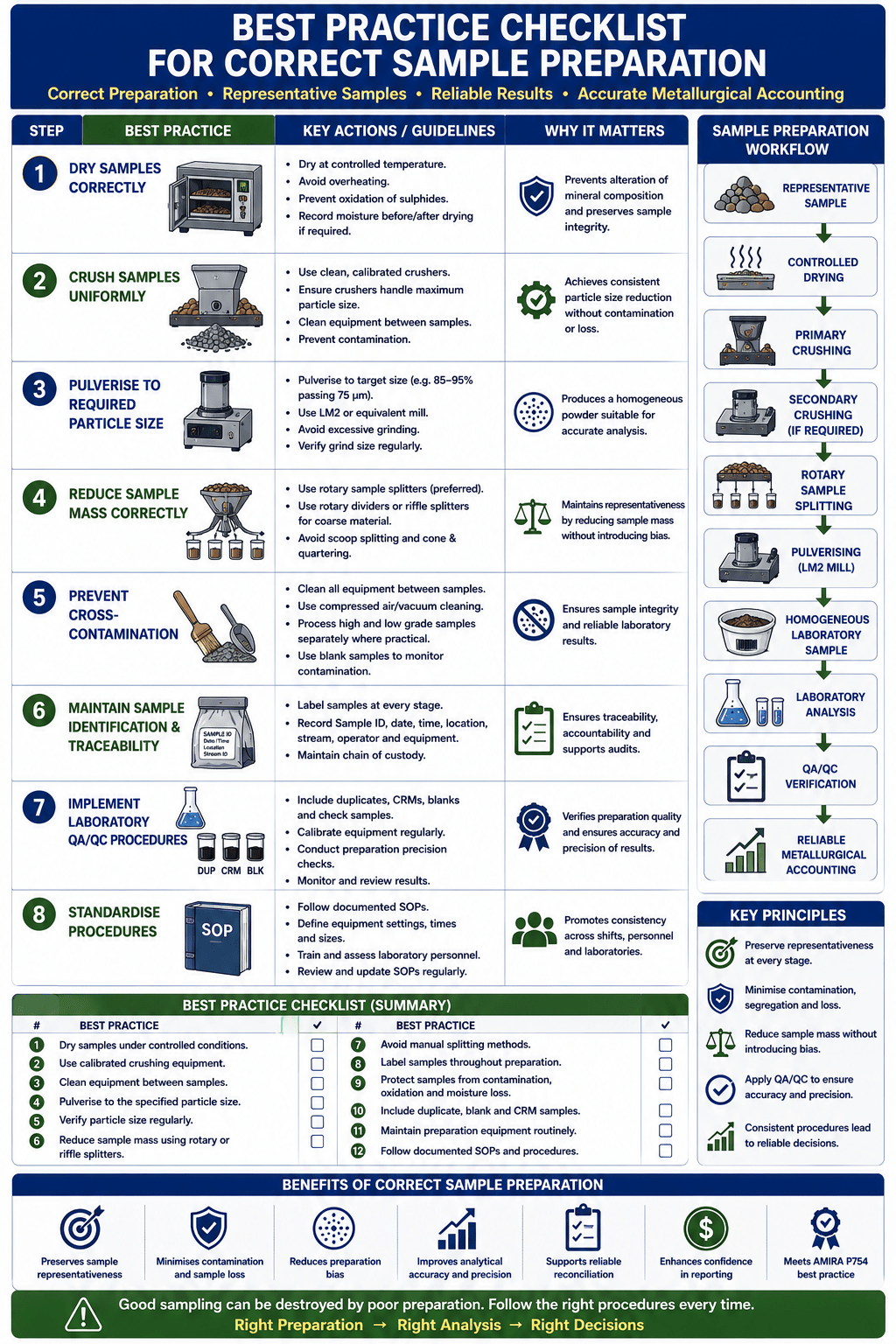
### 1. Dry Samples Correctly Where moisture determination is not required, samples should be dried under controlled conditions before further preparation.
**Best practices include:**
* Use drying ovens at controlled temperatures.
* Avoid overheating, which may alter mineral composition.
* Prevent oxidation of sulphide minerals by using appropriate drying conditions. * Record initial and final moisture content where required.
### 2. Crush Samples Uniformly Primary crushing reduces the sample to a manageable size while maintaining representativeness.
**Guidelines:**
* Use clean, calibrated crushers.
* Ensure crushers are capable of handling the maximum particle size.
* Prevent sample contamination from previous samples.
* Clean crushing equipment between samples.
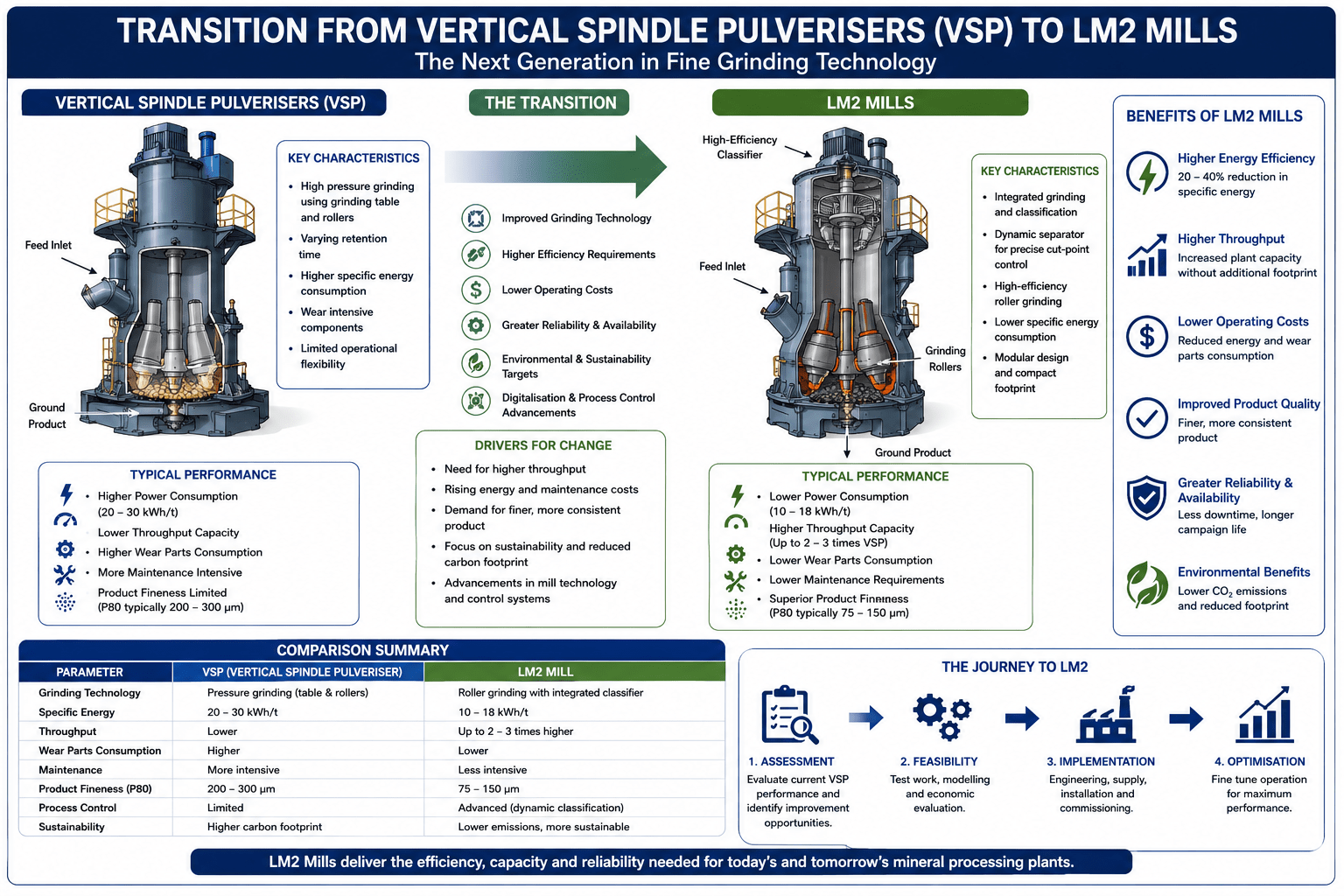
### 3. Pulverise to the Required Particle Size Pulverising produces a homogeneous powder suitable for laboratory analysis.
**Best practice:**
* Achieve the specified grind size (commonly 85–95% passing 75 µm).
* Use LM2 or equivalent ring-and-puck mills for consistent pulverisation.
* Avoid excessive grinding that may introduce contamination or oxidation.
* Verify grind size periodically.
### 4. Reduce Sample Mass Correctly After crushing or pulverising, sample mass should be reduced without introducing bias.
Preferred methods include:
* Rotary sample splitters
* Rotary dividers
* Riffle splitters (for coarse materials) Avoid:
* Scoop splitting
* Cone-and-quartering where better alternatives exist
* Manual selection of particles
### 5. Prevent Cross-Contamination
Cross-contamination can significantly affect analytical accuracy.
**Control measures include:**
* Thoroughly clean all preparation equipment between samples.
* Use compressed air or vacuum systems where appropriate.
* Prepare high-grade and low-grade samples separately where practical.
* Include blank samples to monitor contamination.
### 6. Maintain Sample Identification and Traceability Every sample should remain fully traceable throughout preparation.
Record:
* Sample ID
* Sampling location
* Date and time
* Preparation operator
* Equipment used
* Preparation stages completed Proper labelling prevents sample mix-ups and supports audit requirements.
### 7. Implement Laboratory QA/QC Procedures
Quality assurance should be incorporated into every preparation stage. Include:
* Duplicate preparation samples
* Certified Reference Materials (CRMs)
* Blank samples
* Check samples
* Equipment calibration
* Routine maintenance
* Preparation precision studies QA/QC ensures preparation methods remain accurate and repeatable.
### 8. Standardise Procedures
All sample preparation activities should follow documented SOPs.
SOPs should specify:
* Drying temperatures and times
* Crusher settings
* Pulveriser settings
* Sample reduction procedures
* Cleaning procedures
* Acceptance criteria
* QA/QC requirements Standardisation improves consistency across operators and shifts.
--- ## Benefits of Correct Sample Preparation
* Preserves sample representativeness
* Minimises contamination and sample loss
* Reduces preparation bias
* Improves analytical precision and accuracy
* Produces consistent laboratory results
* Supports reliable metallurgical reconciliation
* Enhances confidence in production reporting
* Facilitates compliance with the AMIRA P754 Code of Practice
* Improves process control and operational decision-making
* Ensures defensible and auditable metallurgical accounting data
Maintain High Laboratory Standards
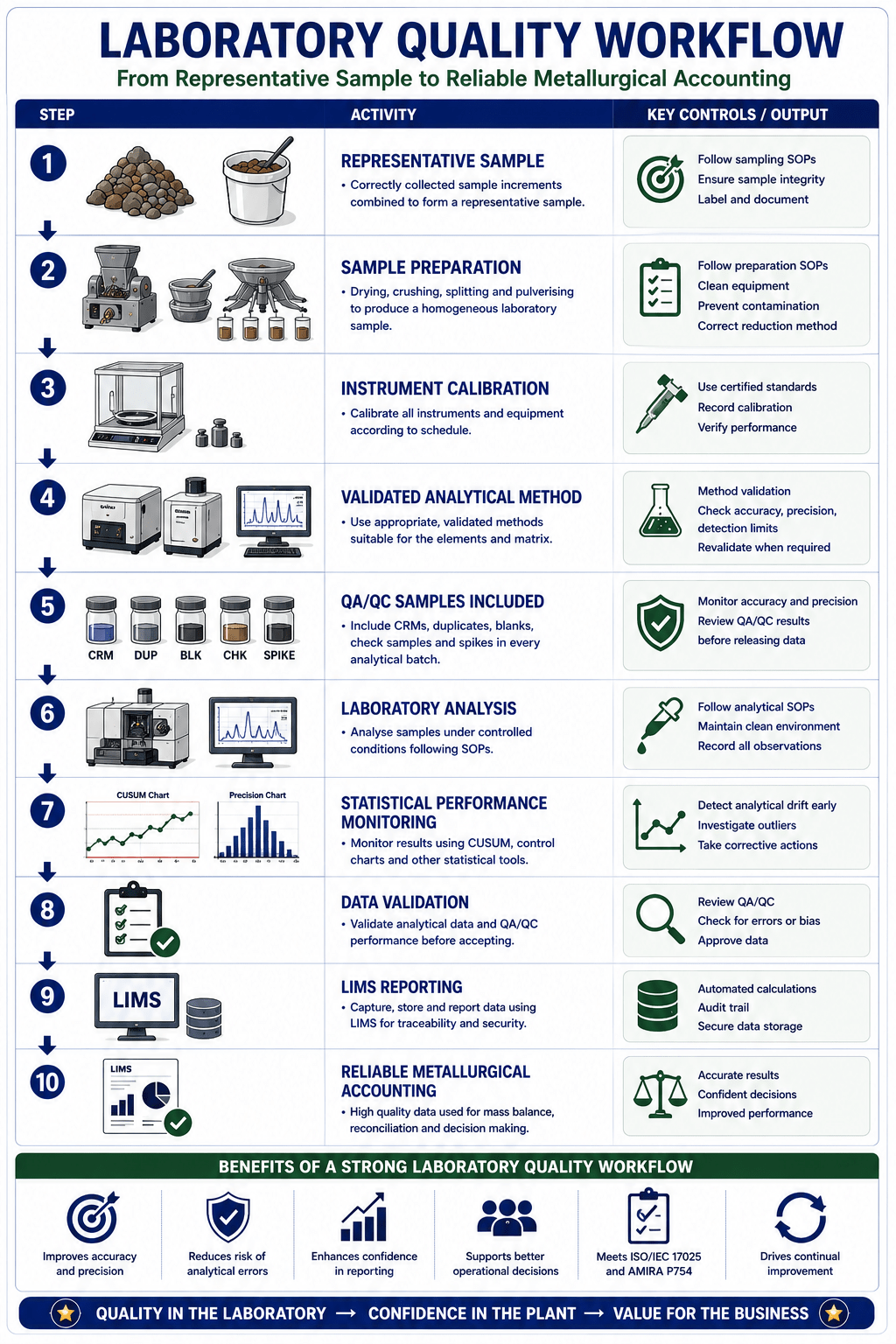
Maintaining high laboratory standards is fundamental to achieving accurate, precise, and reliable metallurgical accounting.
Regardless of how representative a sample is, poor laboratory practices can introduce analytical errors that undermine mass balance calculations, reconciliation, and financial reporting. A well-managed laboratory operates under a documented quality management system, follows standardized analytical procedures, and continuously monitors performance through rigorous Quality Assurance and Quality Control (QA/QC) programmes. Internationally recognised standards such as **ISO/IEC 17025** and the **AMIRA P754 Code of Practice for Metal Accounting** provide the framework for ensuring laboratory competence and data integrity.
### 1. Implement a Laboratory Quality Management System
A laboratory should operate under a documented Quality Management System (QMS) that defines:
* Standard Operating Procedures (SOPs)
* Analytical methods
* Equipment maintenance schedules
* Calibration procedures
* Staff competency requirements
* QA/QC protocols
* Document control and record management
* Corrective and preventive action procedures
A formal QMS promotes consistency, traceability, and continual improvement.
### 2. Use Validated Analytical Methods
Analytical methods should be appropriate for the material being analysed and validated before routine use.
Examples include:
* XRF (X-ray Fluorescence)
* ICP-OES (Inductively Coupled Plasma Optical Emission Spectrometry)
* ICP-MS (Mass Spectrometry)
* Atomic Absorption Spectroscopy (AAS)
* Fire Assay for precious metals
* LECO analysers for carbon and sulphur
* Moisture determination ovens Methods should be periodically reviewed and revalidated when process conditions change.
### 3. Regularly Calibrate Laboratory Equipment
Laboratory instruments must be calibrated according to manufacturer specifications and documented schedules.
Calibration applies to:
* Analytical balances
* XRF instruments
* ICP instruments
* Pulverisers
* Drying ovens
* Moisture analysers
* Pipettes
* Volumetric equipment Routine calibration ensures analytical accuracy and repeatability.
### 4. Implement Comprehensive QA/QC Programmes
Every analytical batch should include quality control samples such as:
* Certified Reference Materials (CRMs)
* Duplicate samples
* Blank samples
* Check samples
* Internal reference standards
* Spike recovery samples QA/QC results should be reviewed before analytical data are released.
### 5. Participate in Proficiency Testing
Laboratories should regularly participate in:
* Inter-laboratory comparison programmes
* Round-robin testing
* External proficiency testing schemes
Participation provides independent verification of laboratory performance.
### 6. Monitor Laboratory Performance
Laboratory performance should be monitored continuously using statistical tools.
Typical techniques include:
* CUSUM charts
* Shewhart Control Charts
* Precision charts
* Bias charts
* Moving averages
* Standard deviation monitoring
* Z-score analysis These tools enable early detection of analytical drift before significant errors occur.
### 7. Maintain Competent Laboratory
Personnel Analysts should receive ongoing training in:
* Analytical techniques
* Instrument operation
* QA/QC procedures
* Sample preparation
* Health and safety
* Data management
* Statistical quality control Competency assessments should be performed regularly. ### 8. Ensure Complete Data Integrity Laboratory Information Management Systems (LIMS) should provide: * Sample tracking * Electronic data capture * Audit trails * Secure storage * Automated calculations * Data validation * Report generation Electronic systems minimise transcription errors and improve traceability. ### 9. Maintain Laboratory Equipment Preventative maintenance programmes should include:
* Routine inspections
* Cleaning
* Wear component replacement
* Instrument servicing
* Performance verification
* Software updates Equipment downtime should be minimised through planned maintenance.
### 10. Promote Continuous Improvement Laboratories should routinely review:
* QA/QC trends
* Customer feedback
* Audit findings
* Analytical turnaround times
* Instrument performance
* Staff competency
* Corrective actions
Continuous improvement helps maintain world-class analytical performance.
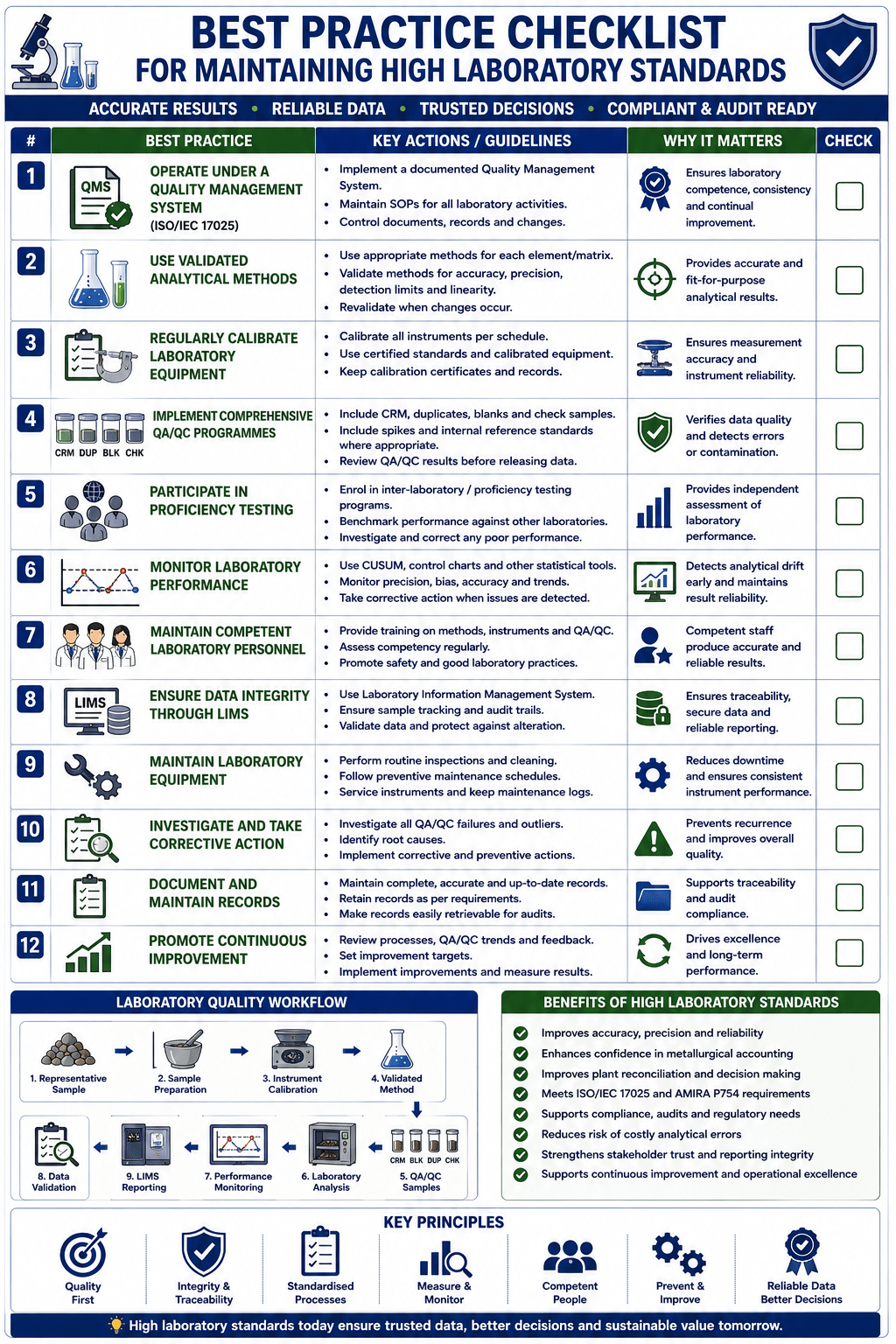
--- ## Benefits of High Laboratory Standards
* Improves analytical accuracy and precision
* Reduces analytical bias and uncertainty
* Enhances confidence in metallurgical accounting
* Improves plant reconciliation accuracy
* Supports informed operational decisions
* Meets ISO/IEC 17025 and AMIRA P754 requirements
* Increases audit readiness and regulatory compliance
* Minimises costly analytical errors
* Strengthens stakeholder confidence in production reporting
* Supports continuous improvement in laboratory performance
Monitor Analytical Performance
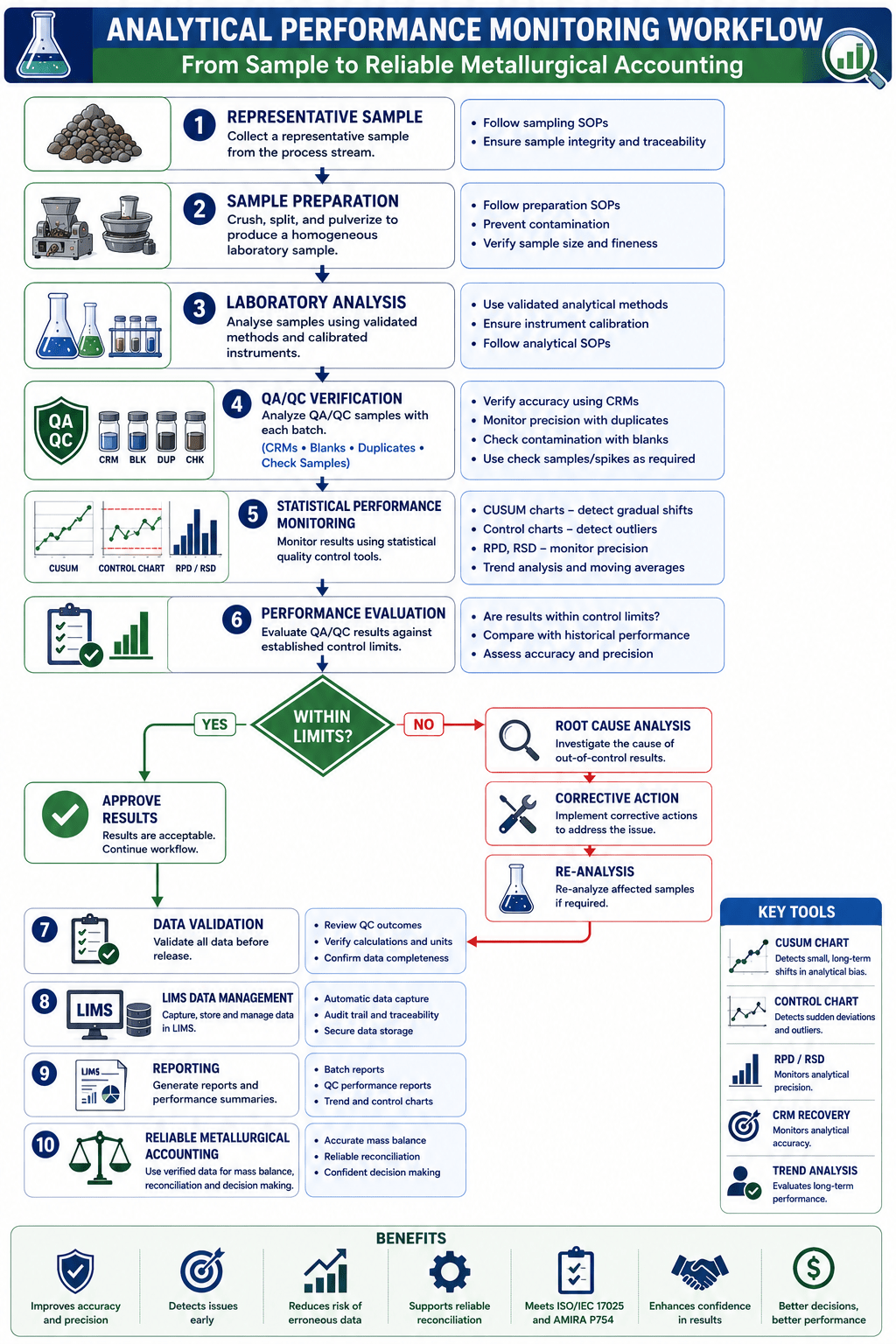
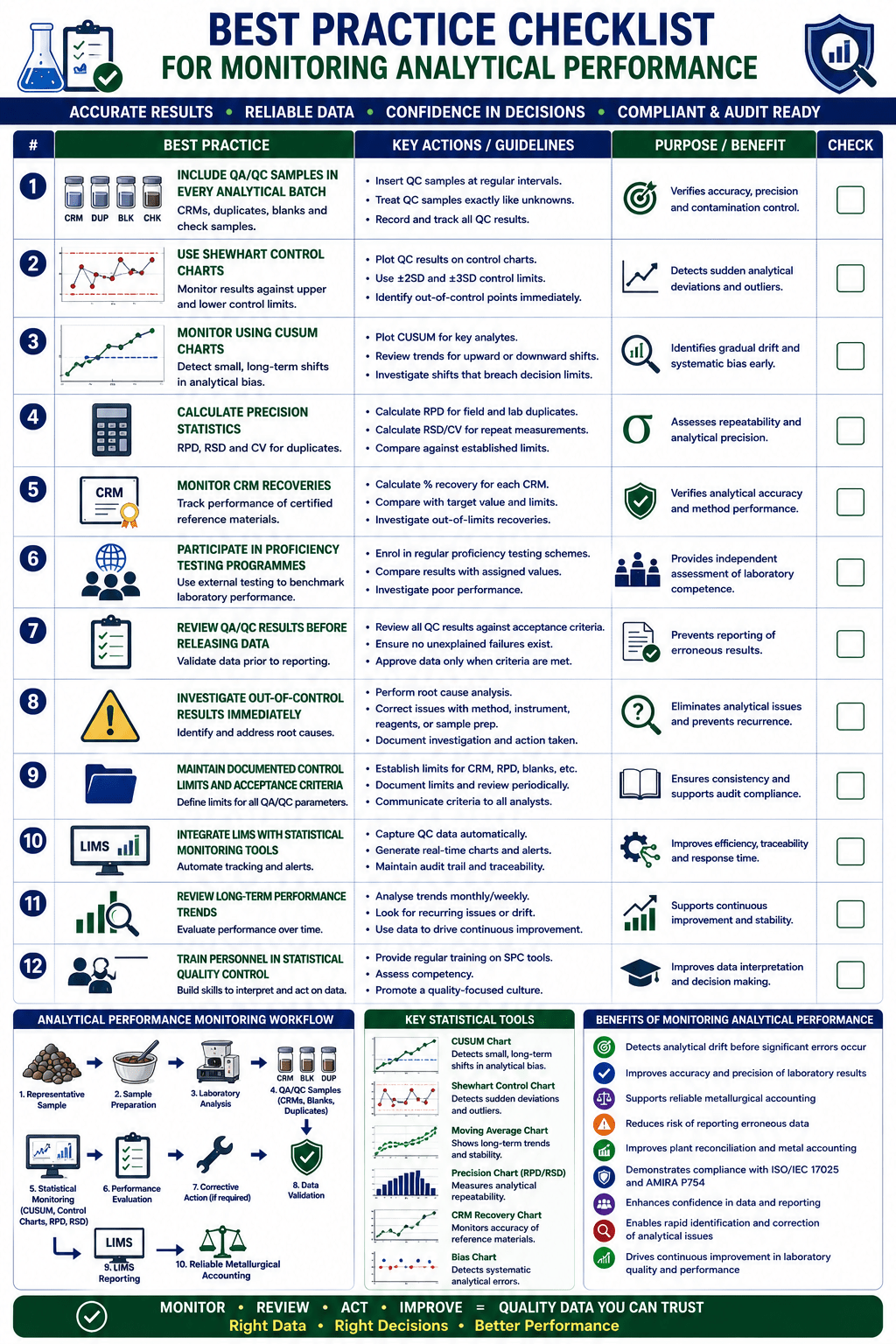
Monitoring analytical performance is essential for ensuring that laboratory results remain accurate, precise, and reliable over time. Even well-calibrated instruments and validated analytical methods can gradually drift due to equipment wear, reagent changes, environmental conditions, or operator variability.
Without continuous performance monitoring, these changes may go unnoticed, leading to systematic errors that affect metallurgical accounting, plant reconciliation, and production reporting.
A comprehensive analytical performance monitoring programme uses statistical quality control tools to identify trends, detect bias, and initiate corrective actions before significant errors occur.
The foundation of analytical performance monitoring is a robust **Quality Assurance and Quality Control (QA/QC)** programme.
Every analytical batch should include Certified Reference Materials (CRMs), duplicate samples, blank samples, check samples, and, where appropriate, spiked samples.
These quality control samples provide independent verification of laboratory accuracy, precision, contamination control, and analytical consistency.
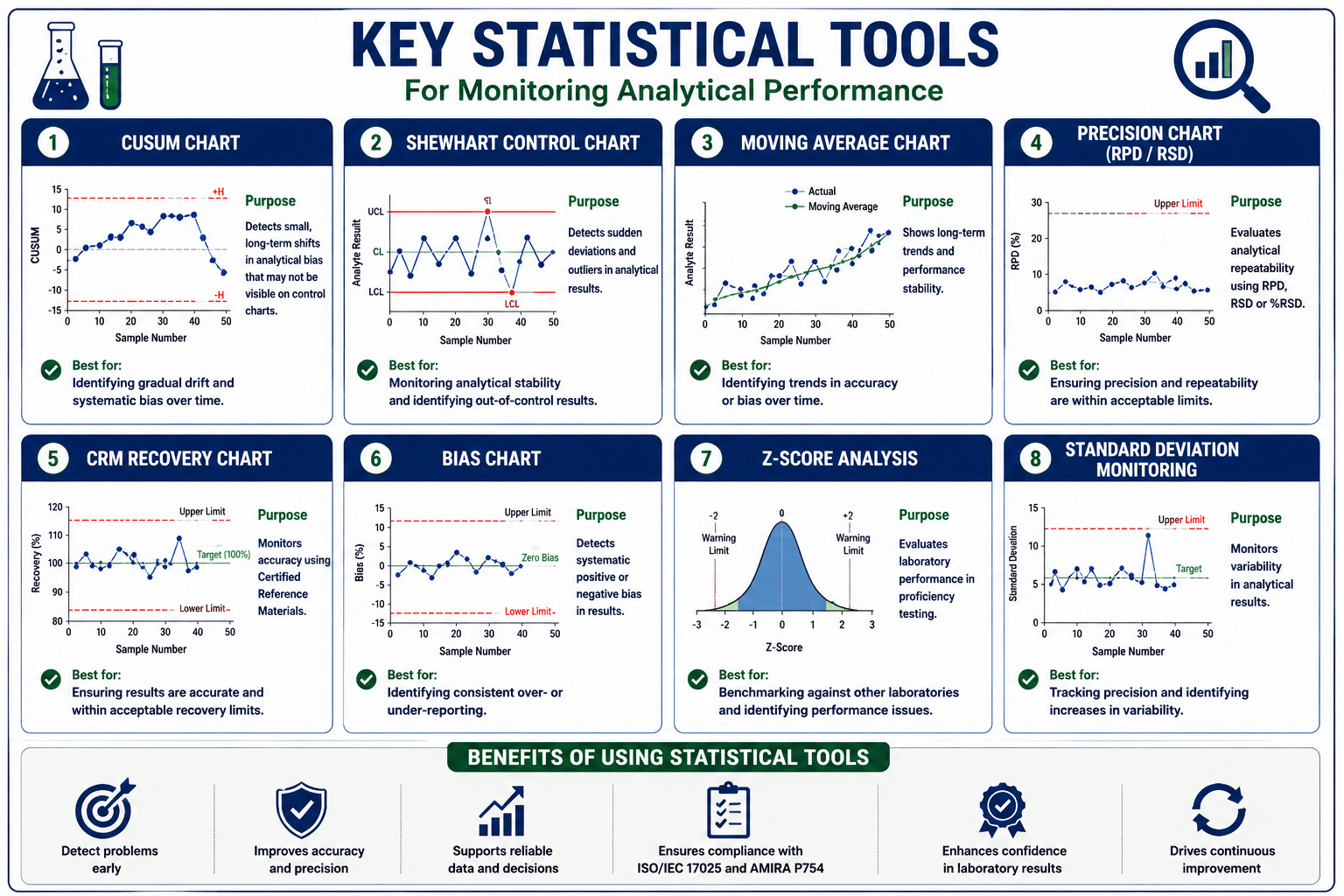
Statistical Process Control (SPC) techniques are widely used to monitor laboratory performance. **Shewhart Control Charts** identify sudden deviations from expected performance by comparing analytical results against upper and lower control limits.
**CUSUM (Cumulative Sum) Charts** are particularly effective at detecting small but persistent shifts in analytical bias that may not be immediately visible on conventional control charts.
Trend analysis, moving averages, and standard deviation monitoring provide additional insight into laboratory stability over time.
Analytical precision should be routinely evaluated by analysing duplicate samples and calculating statistical measures such as Relative Percent Difference (RPD),
Relative Standard Deviation (RSD), and coefficient of variation (CV). These indicators measure repeatability and help identify problems associated with sample preparation, instrument performance, or analytical procedures. Accuracy should be assessed using Certified Reference Materials and participation in external proficiency testing programmes.
CRM recoveries should consistently fall within established acceptance limits, while proficiency testing provides independent confirmation that laboratory results are comparable with those from accredited laboratories.
Any significant deviation from target values should trigger an investigation into instrument calibration, reagent quality, sample preparation procedures, or analyst performance.
Laboratories should establish documented acceptance criteria for all QA/QC parameters and implement corrective action procedures whenever control limits are exceeded.
Root cause analysis should identify the source of the problem, corrective actions should be implemented promptly, and affected analytical results should be reviewed before being released for metallurgical accounting purposes. Modern laboratories often integrate Laboratory Information Management Systems (LIMS) with statistical quality control software to automate data capture, generate real-time performance dashboards, and alert laboratory personnel when analytical performance begins to deteriorate.
Automation improves response times, enhances traceability, and reduces the risk of human error.
--- ## Benefits of Monitoring Analytical Performance
* Detects analytical drift before significant errors occur
* Improves laboratory accuracy and precision
* Supports reliable metallurgical accounting
* Reduces the risk of reporting erroneous analytical data
* Improves plant reconciliation and metal accounting accuracy
* Demonstrates compliance with ISO/IEC 17025 and AMIRA P754
* Enhances confidence in laboratory results
* Supports informed operational and financial decision-making
* Enables rapid identification and correction of analytical issues
* Drives continuous improvement in laboratory quality and performance
Maintain Complete Sample Traceability
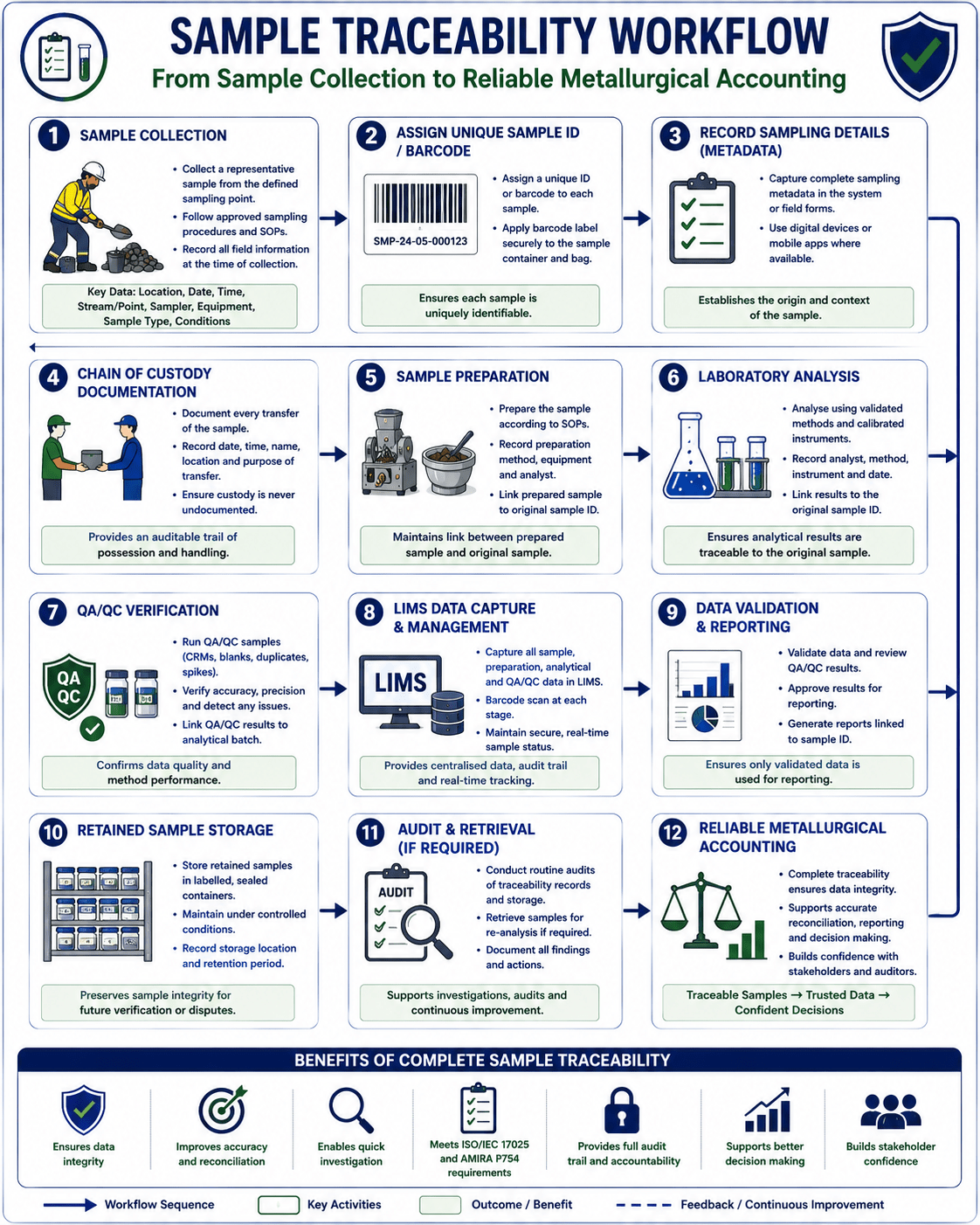
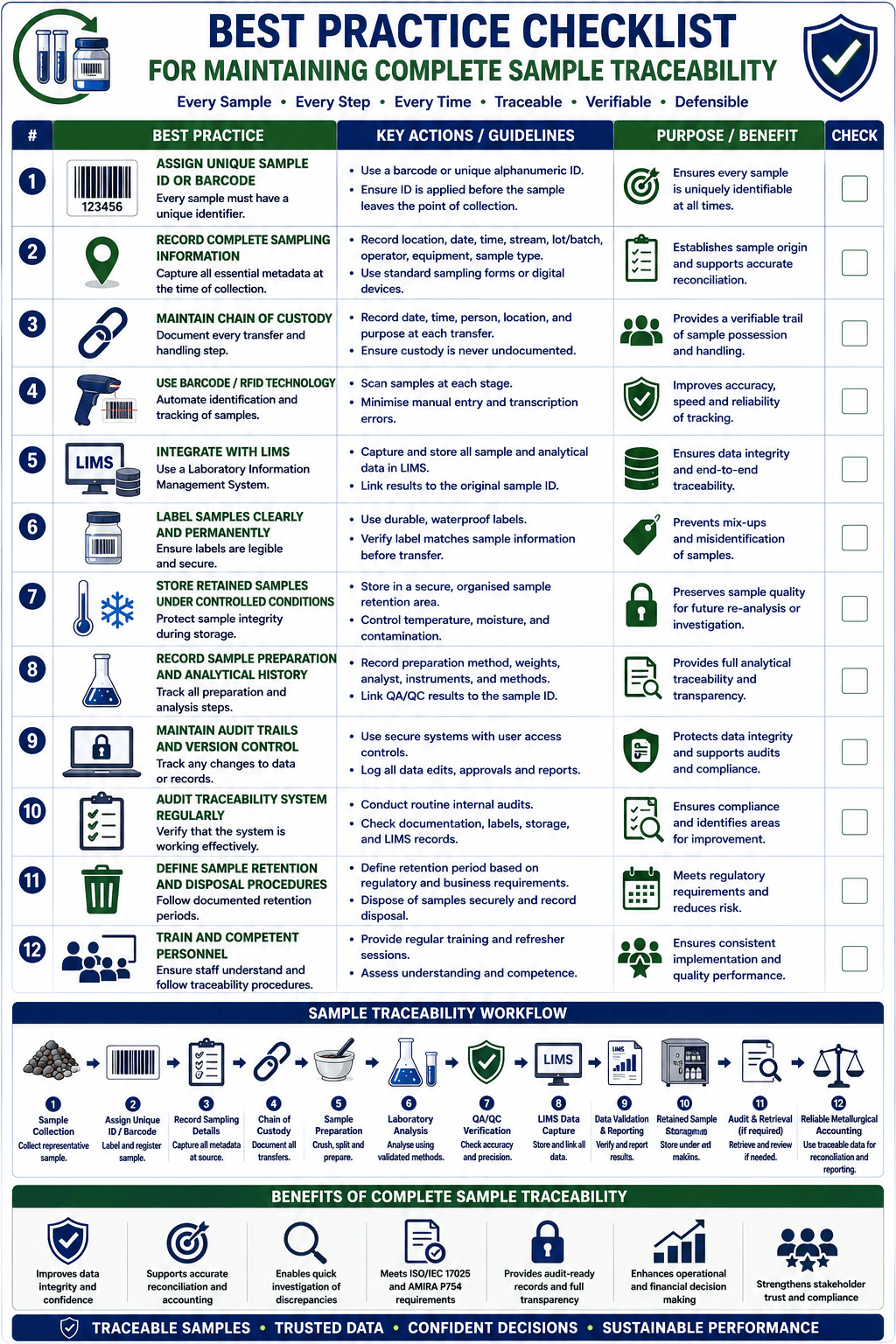
Maintaining complete sample traceability is a critical component of an effective metallurgical accounting system.
Every sample collected throughout the mineral processing value chain must be uniquely identifiable and traceable from the point of collection through sample preparation, laboratory analysis, data validation, reporting, and long-term storage.
Complete traceability ensures that analytical results can be verified, audited, and linked directly to the corresponding process stream, providing confidence in metallurgical reconciliation, production reporting, and financial accounting.
A robust sample traceability system begins at the sampling point, where every sample is assigned a unique identification number or barcode. This identifier should accompany the sample throughout its entire lifecycle, ensuring that there is no ambiguity regarding its origin or handling. Essential metadata—including sampling location, date and time, process stream, operator, sampling equipment, and sample type—should be recorded at the time of collection to establish a comprehensive chain of custody.
The chain of custody should document every transfer and handling event, from the sampling station to the preparation laboratory, analytical laboratory, storage facilities, and eventual disposal.
Each individual responsible for handling the sample should record the date, time, and purpose of the transfer.
This level of documentation prevents sample mix-ups, supports audit requirements, and enables rapid investigation should discrepancies arise. Modern metallurgical laboratories increasingly employ **Laboratory Information Management Systems (LIMS)** integrated with barcode or RFID technologies to automate sample tracking.
Barcode scanners minimise manual data entry errors, provide real-time sample status updates, and enable complete electronic audit trails. Integration with plant control systems allows analytical results to be linked directly to production data, improving reconciliation accuracy and operational decision-making.
Proper sample storage is another essential aspect of traceability. Retained samples should be stored in clearly labelled, secure containers under controlled environmental conditions to prevent contamination, moisture loss, oxidation, or deterioration.
Retention periods should comply with company procedures and regulatory requirements, allowing samples to be re-analysed if disputes or investigations arise.
Traceability also extends to analytical data. Laboratory results should be electronically linked to the original sample identification number, preparation records, instrument calibration records, QA/QC results, analyst information, and reporting history.
Any modification to analytical results should be documented through an auditable version-control process to preserve data integrity and transparency.
Routine audits of the sample traceability system should verify that all documentation is complete, barcode systems function correctly, chain-of-custody records are maintained, and retained samples remain identifiable. Continuous monitoring and improvement of traceability processes support compliance with **ISO/IEC 17025**, the **AMIRA P754 Code of Practice**, and corporate governance requirements.
--- ## Benefits of Complete Sample Traceability
* Ensures every sample is uniquely identifiable
* Prevents sample mix-ups and transcription errors
* Improves confidence in analytical results
* Supports accurate metallurgical reconciliation
* Enables rapid investigation of discrepancies
* Facilitates compliance with ISO/IEC 17025 and AMIRA P754
* Provides complete audit trails for regulatory and financial reporting
* Enhances data integrity and accountability
* Supports effective laboratory and process management
* Strengthens stakeholder confidence in metallurgical accounting and operational decision-making
Perform Regular Sampling Audits
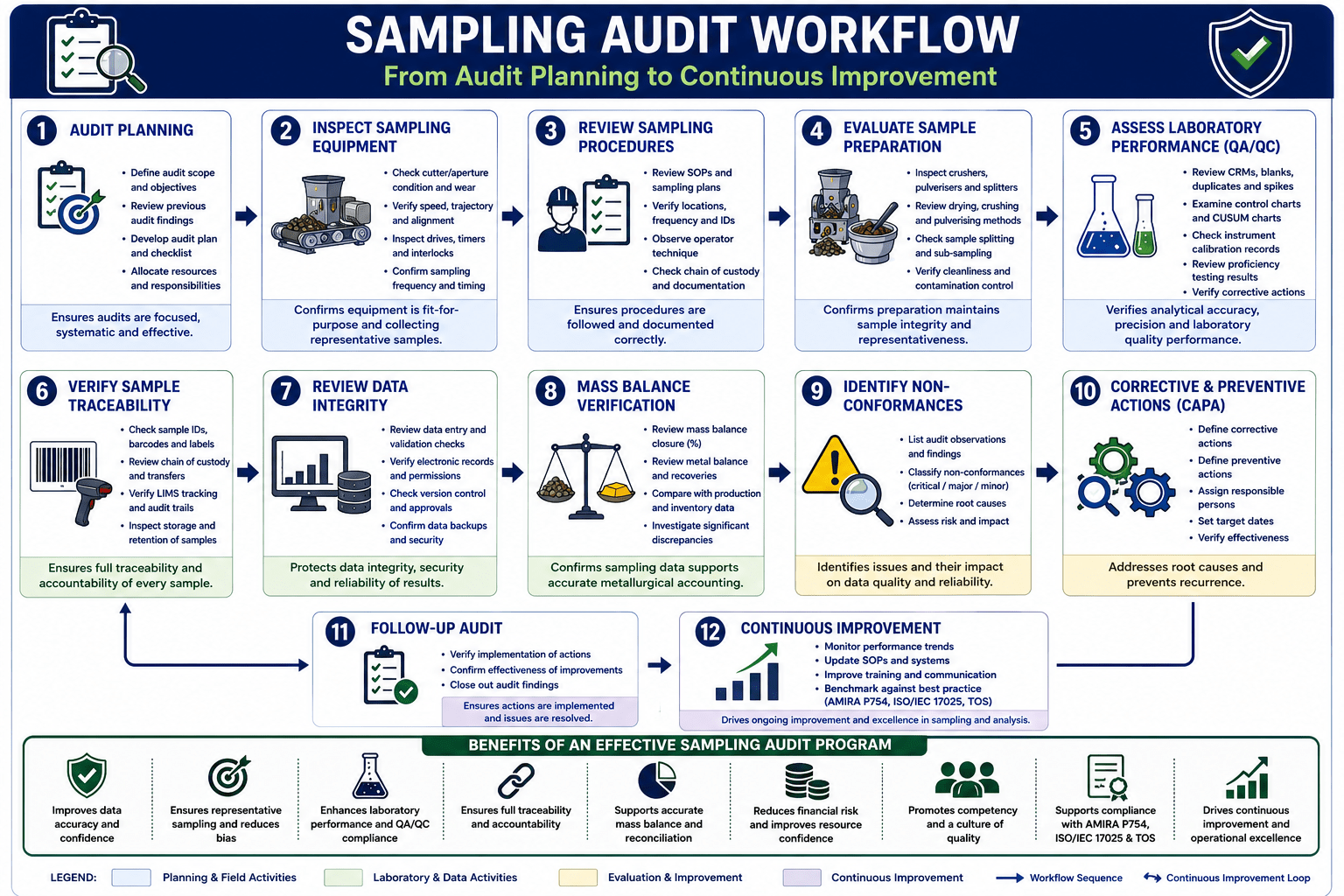
Regular sampling audits are an essential component of a robust metallurgical accounting system. They provide independent verification that sampling systems, sample preparation procedures, laboratory practices, and data management processes continue to produce representative, accurate, and reliable results. Even well-designed sampling systems can deteriorate over time due to equipment wear, process changes, inadequate maintenance, or procedural deviations. Routine audits help identify these issues before they affect metallurgical reconciliation, production reporting, and financial performance. Sampling audits should be conducted in accordance with internationally recognised best practices, including the **AMIRA P754 Code of Practice for Metal Accounting**, **Pierre Gy's Theory of Sampling (TOS)**, and applicable **ISO/IEC 17025** laboratory quality requirements.
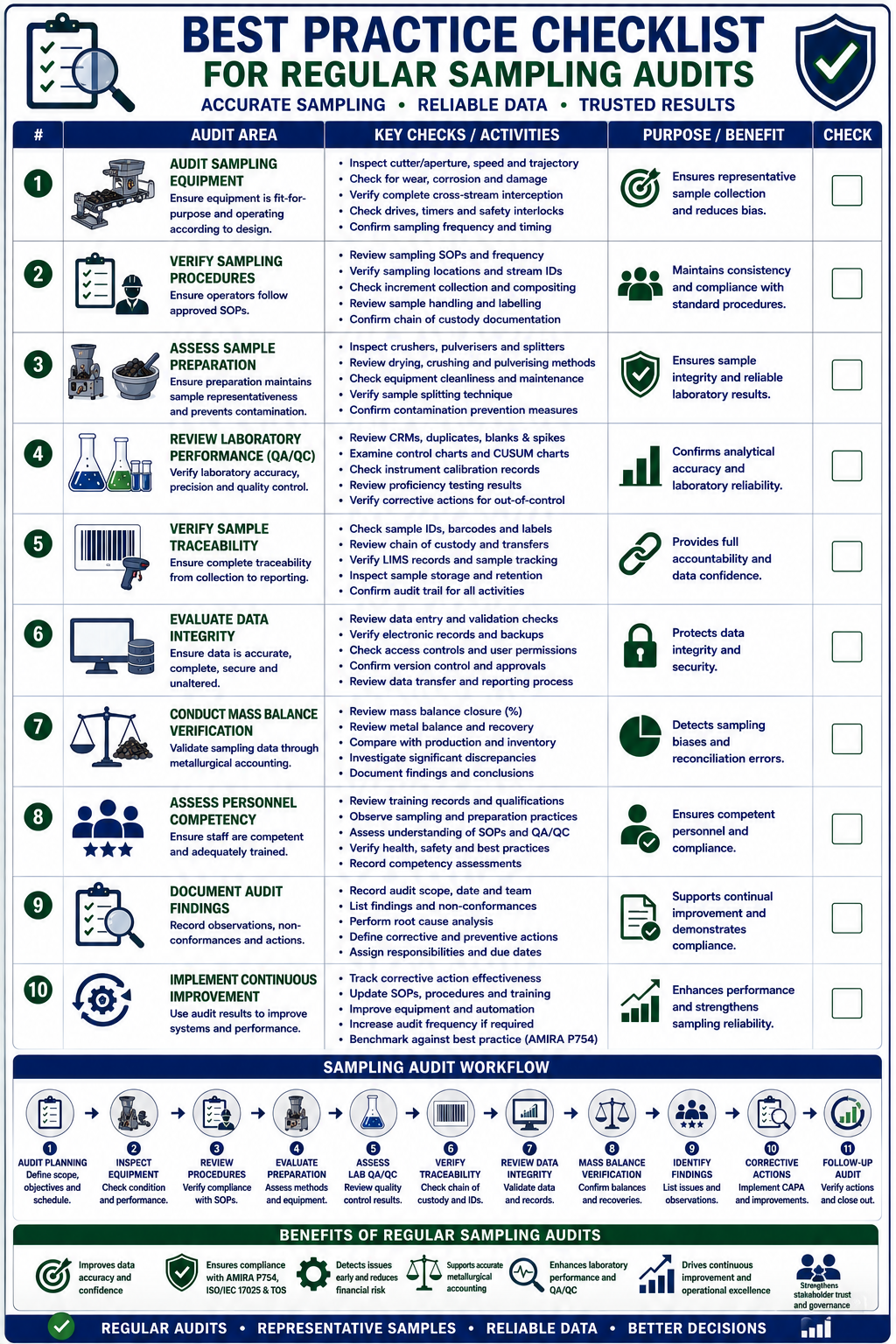
Audits should evaluate every stage of the sampling chain, from sample collection through laboratory analysis and reporting.
### 1. Audit Sampling Equipment Inspect all mechanical sampling equipment to verify that it continues to operate according to its original design specifications.
Audit activities include:
* Inspect cutter geometry and aperture dimensions.
* Verify cutter speed and trajectory.
* Check for excessive wear and corrosion.
* Confirm complete cross-stream interception.
* Inspect motors, bearings, drives, and actuators.
* Verify timing and sampling frequency.
* Ensure safety interlocks function correctly.
### 2. Verify Sampling Procedures Ensure operators follow documented Standard Operating Procedures (SOPs).
Review:
* Sampling frequency
* Sampling locations
* Increment collection methods
* Composite sample preparation
* Sample handling procedures
* Chain of custody documentation Observe operators during normal plant operation to confirm compliance.
### 3. Assess Sample Preparation Evaluate all stages of sample preparation.
Inspect:
* Drying procedures
* Crushing equipment
* Pulverising equipment
* Sample splitting methods
* Cleaning procedures
* Contamination controls
* Equipment maintenance records Verify that preparation procedures preserve sample representativeness.
### 4. Review Laboratory Performance Audit laboratory QA/QC programmes by examining:
* Certified Reference Materials (CRMs)
* Duplicate analyses
* Blank samples
* Check samples
* Instrument calibration records
* Control charts
* CUSUM charts
* Proficiency testing results
Ensure corrective actions are implemented when control limits are exceeded.
### 5. Verify Sample Traceability
Confirm complete sample traceability from collection to reporting. Review:
* Sample identification
* Barcode systems
* Chain of custody
* LIMS records
* Sample storage
* Retention procedures
* Audit trails Every sample should be fully traceable throughout its lifecycle.
### 6. Evaluate Data Integrity Verify that analytical data are complete, accurate, and secure.
Audit:
* Electronic records
* Manual records
* Data transfers
* Version control
* Report approvals
* Data backups
* Cybersecurity measures
Ensure analytical results cannot be altered without documented authorisation.
### 7. Conduct Mass Balance
Verification Compare sampling data with metallurgical accounting reconciliation.
Review:
* Mass balance closure
* Metal balance closure
* Recovery calculations
* Inventory reconciliation
* Production reports
Significant discrepancies may indicate sampling bias or analytical errors.
### 8. Assess Personnel Competency Review training records and observe staff performance.
Confirm competency in:
* Sampling techniques
* Sample preparation
* Laboratory analysis
* QA/QC procedures
* Health and safety
* Documentation
* Statistical quality control
Competency assessments should be performed regularly.
### 9. Document Audit Findings
Every audit should produce a formal report containing:
* Audit scope
* Findings
* Non-conformances
* Root cause analysis
* Corrective actions
* Preventive actions
* Responsible personnel
* Completion dates
Audit reports provide evidence of continual improvement.
### 10. Implement Continuous Improvement
Audit findings should be used to improve the sampling system continuously. Actions may include:
* Equipment upgrades
* SOP revisions
* Additional operator training
* Improved QA/QC procedures
* Increased audit frequency
* Enhanced automation
* Better documentation practices
Continuous improvement strengthens the reliability of metallurgical accounting.
--- ## Benefits of Regular Sampling Audits
* Confirms representative sampling practices
* Detects equipment wear and operational deficiencies
* Improves analytical accuracy and laboratory performance
* Enhances sample traceability and data integrity
* Supports accurate metallurgical reconciliation
* Reduces financial losses caused by sampling errors
* Demonstrates compliance with AMIRA P754, ISO/IEC 17025, and the Theory of Sampling
* Strengthens confidence in production reporting and metal accounting
* Promotes a culture of quality and continuous improvement
* Improves overall mineral processing plant performance and governance
Validate Metallurgical Accounting Data
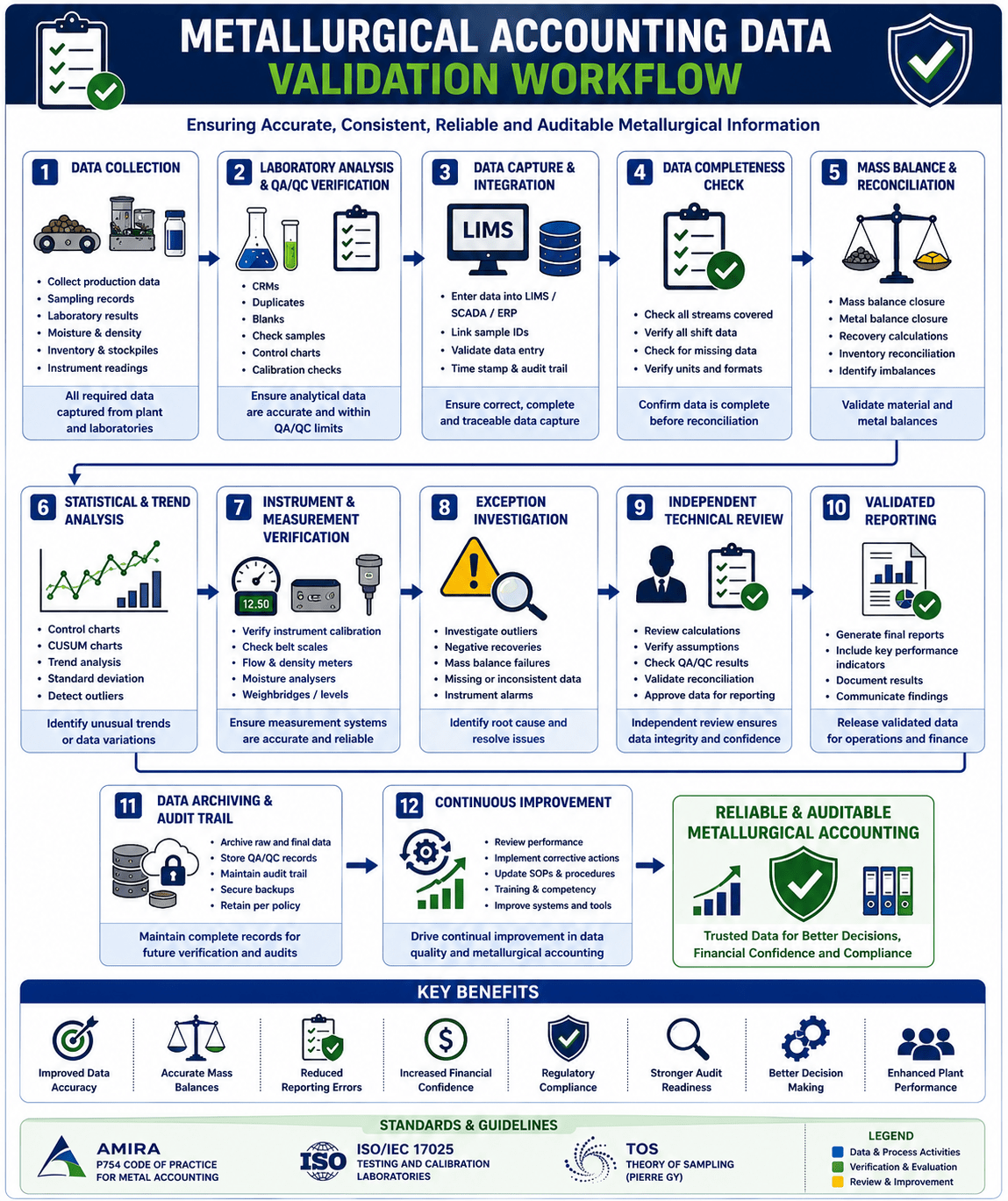
Validation of metallurgical accounting data is the final quality assurance step before production figures are used for operational decision-making, financial reporting, reconciliation, and regulatory compliance. The objective is to ensure that all reported data are **accurate, complete, consistent, traceable, and representative** of the actual material flows through the mineral processing plant. Data validation combines statistical analysis, mass balancing, laboratory QA/QC, and systematic review procedures to identify errors, inconsistencies, or biases before information is released.
A comprehensive validation process should follow the principles of the **AMIRA P754 Code of Practice for Metal Accounting**, the **Theory of Sampling (TOS)**, and recognised quality management systems such as **ISO/IEC 17025**.
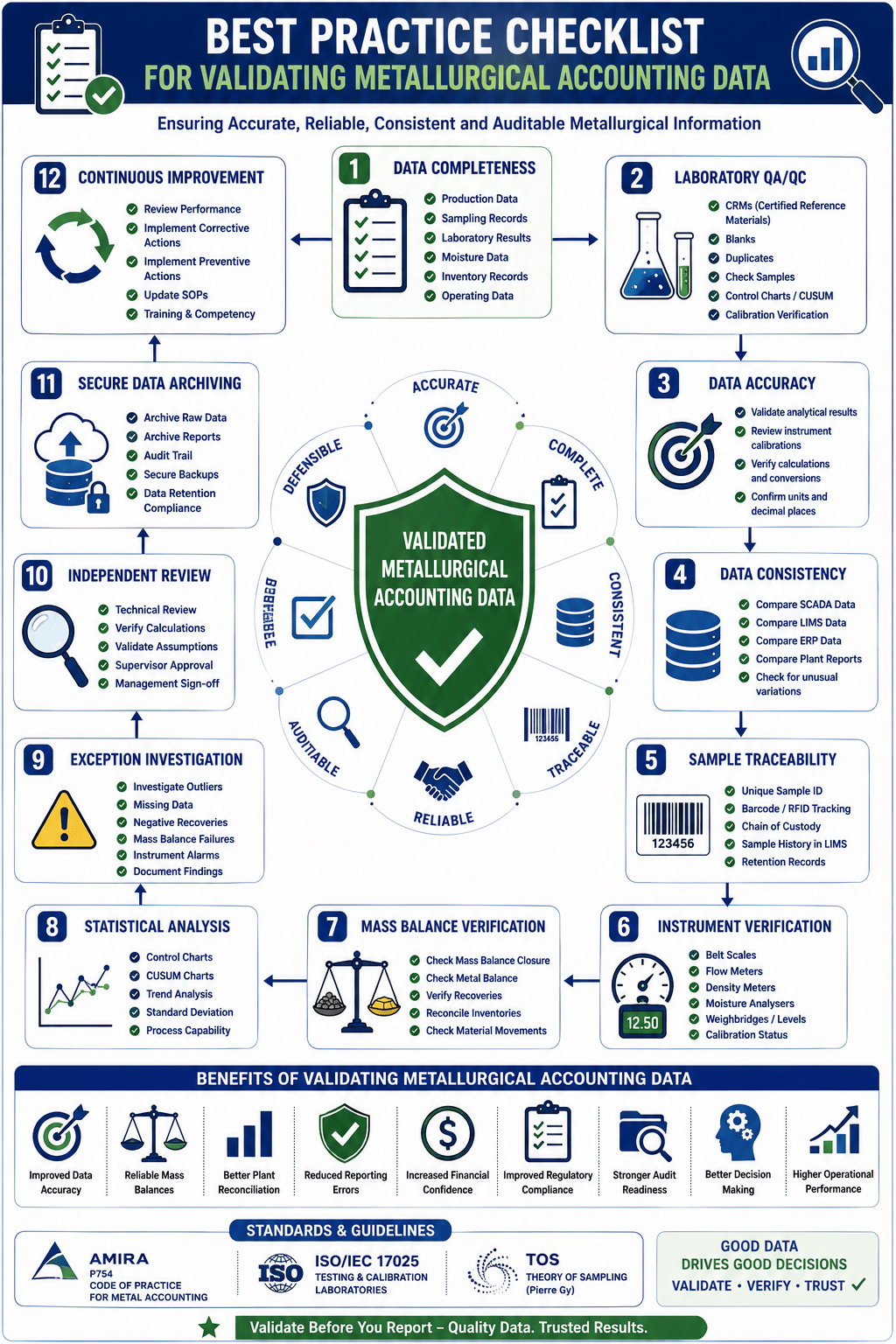
Validation should cover every stage of the metallurgical accounting system, including sampling, sample preparation, laboratory analysis, data capture, reconciliation, reporting, and archival.
### 1. Verify Data Completeness Ensure that all required production and laboratory data have been collected and recorded.
Review:
* Sampling records
* Laboratory analytical results
* Moisture determinations
* Throughput measurements
* Inventory records
* Equipment operating data
* Shift reports
* Production logs Missing data should be investigated before reconciliation begins.
### 2. Confirm Data Accuracy Validate analytical results by reviewing laboratory QA/QC performance.
Check:
* Certified Reference Materials (CRMs)
* Duplicate samples
* Blank samples
* Check samples
* Instrument calibration records
* Control charts
* CUSUM charts Only validated analytical results should be used for metallurgical accounting.
### 3. Assess Data Consistency
Compare data across different sources.
Examples include:
* Plant throughput vs conveyor belt scales
* Production reports vs laboratory assays
* Stockpile movements vs inventory records
* Shift reports vs SCADA data
* Laboratory results vs historical trends Unexpected deviations should be investigated.
### 4. Perform Mass Balance Verification Mass balancing provides one of the most powerful validation tools.
Verify:
* Mass balance closure
* Metal balance closure
* Recovery calculations
* Inventory reconciliation
* Material movement consistency
Large reconciliation errors may indicate sampling or measurement problems.
### 5. Review Statistical Trends
Use statistical techniques to identify unusual behaviour.
Monitor:
* Control charts
* CUSUM charts
* Moving averages
* Standard deviations
* Process capability indices
* Trend analysis Statistical monitoring helps identify gradual deterioration in data quality.
### 6. Verify Sample Traceability
Confirm every analytical result can be traced back to its original sample.
Review:
* Sample IDs
* Barcode records
* Chain of custody
* LIMS records
* Sample preparation records
* Instrument records
Traceability ensures accountability and audit readiness.
### 7. Validate Instrument Measurements
Verify field instruments supplying accounting data.
Examples include:
* Belt scales
* Density meters
* Flow meters
* Moisture analysers
* Weighbridges
* Online analysers
* Tank level sensors
Calibration records should be current and documented.
### 8. Investigate Exceptions Any abnormal result should trigger investigation.
Examples include:
* Outlier assays
* Negative recoveries
* Unexpected inventory changes
* Mass balance failures
* Missing data
* Instrument alarms
Corrective actions should be documented before final reporting.
### 9. Obtain Independent Review
Validated data should be independently reviewed by qualified personnel before release.
Reviewers should verify:
* Calculations
* QA/QC performance
* Reconciliation results
* Assumptions
* Reporting accuracy Independent review improves confidence in reported results.
### 10. Archive Validated Data
Maintain complete historical records.
Archive:
* Analytical results
* QA/QC records
* Calibration certificates
* Reconciliation reports
* Audit reports
* Supporting calculations
* LIMS records Proper archiving supports future audits and investigations.
--- ## Benefits of Validating Metallurgical Accounting Data
* Improves confidence in production reporting
* Enhances mass balance and reconciliation accuracy
* Detects analytical, sampling, and measurement errors
* Supports informed operational decision-making
* Strengthens financial reporting and metal accounting
* Demonstrates compliance with AMIRA P754, ISO/IEC 17025, and the Theory of Sampling
* Reduces business risk associated with inaccurate data
* Improves audit readiness and regulatory compliance
* Supports continuous improvement of metallurgical accounting systems
* Increases stakeholder confidence in plant performance and reporting
Ensure Competent Personnel
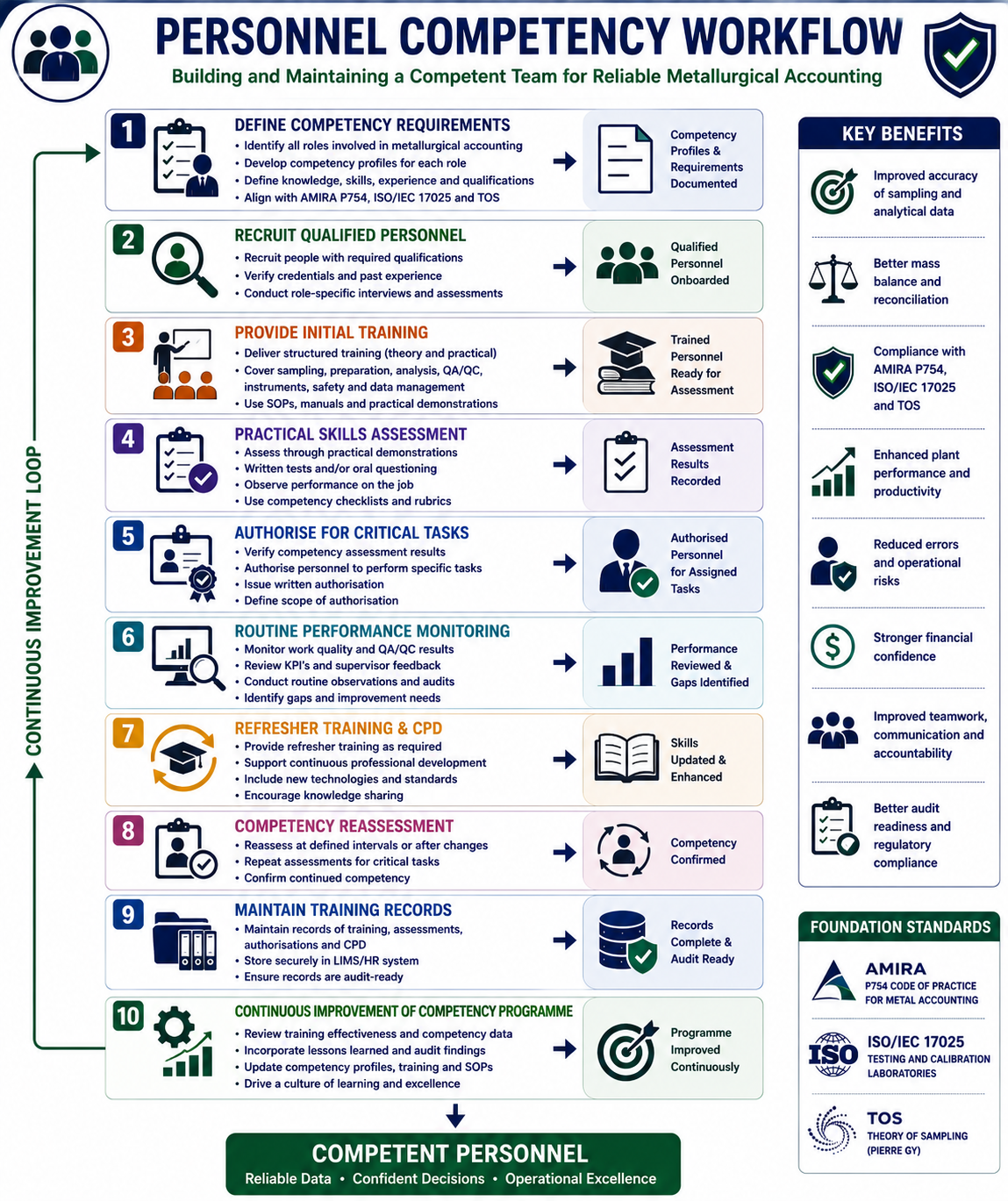
Competent personnel are the cornerstone of a reliable metallurgical accounting system.
Even with well-designed sampling equipment, standardized procedures, and advanced laboratory instrumentation, the quality of metallurgical accounting ultimately depends on the knowledge, skills, and diligence of the people responsible for sampling, sample preparation, laboratory analysis, data management, and reporting.
Personnel competency directly influences the accuracy, precision, and integrity of sampling and analytical data, making it essential for organisations to invest in recruitment, training, assessment, and continuous professional development.
A structured competency programme should align with the principles of the **AMIRA P754 Code of Practice for Metal Accounting**, **ISO/IEC 17025**, and **Pierre Gy’s Theory of Sampling (TOS)**.
The programme should define the competencies required for each role, establish clear training pathways, assess proficiency regularly, and ensure that only qualified personnel perform critical metallurgical accounting tasks.
### 1. Define Competency Requirements
Develop competency profiles for all personnel involved in metallurgical accounting.
Typical roles include:
* Sampling technicians
* Plant operators
* Sample preparation technicians
* Laboratory analysts
* Metallurgists
* Instrument technicians
* Data analysts
* Laboratory supervisors
* Metallurgical accountants
* Quality assurance personnel
Each role should have documented qualifications, experience, and competency requirements.
### 2. Provide Structured Training
Personnel should receive comprehensive training covering:
* Representative sampling techniques
* Theory of Sampling (TOS)
* Sample preparation procedures
* Laboratory analytical methods
* QA/QC procedures
* Instrument operation and calibration
* Data management and LIMS
* Metallurgical accounting principles
* Health, safety, and environmental practices
Training should combine classroom instruction with practical, hands-on experience.
### 3. Conduct Competency Assessments
Regular competency assessments help ensure personnel remain capable of performing assigned duties.
Assessment methods include:
* Practical demonstrations
* Written examinations
* Observation during routine work
* Proficiency testing
* Skills matrices
* Supervisor evaluations Competency should be reassessed periodically and after major process or equipment changes.
### 4. Promote Continuous Professional Development (CPD)
Encourage ongoing learning through:
* Refresher training
* Technical workshops
* Industry conferences
* Professional certifications
* Internal knowledge-sharing sessions
* Updates on new technologies and standards Continuous learning helps personnel adapt to evolving best practices.
### 5. Standardise Operating Procedures Ensure personnel consistently follow documented Standard Operating Procedures (SOPs).
SOPs should cover:
* Sampling methods
* Sample preparation
* Laboratory analysis
* QA/QC
* Instrument calibration
* Data recording
* Reporting
* Corrective actions Routine audits should verify adherence to these procedures.
### 6. Develop Multi-Skilled Teams
Cross-training personnel across multiple functions increases operational resilience.
Examples include:
* Samplers trained in sample preparation
* Laboratory analysts trained in QA/QC
* Metallurgists trained in data reconciliation
* Instrument technicians trained in calibration and maintenance Cross-
functional knowledge improves collaboration and reduces operational risk.
### 7. Foster a Quality Culture Create an organisational culture that values:
* Accuracy
* Integrity
* Accountability
* Continuous improvement
* Safety
* Compliance
* Teamwork Personnel should understand the financial and operational importance of accurate metallurgical accounting.
### 8. Monitor Performance
Track personnel performance using measurable indicators such as:
* Training completion rates
* Competency assessment scores
* QA/QC performance
* Audit findings
* Sampling errors
* Laboratory non-conformances
* Safety performance
* Corrective action completion
Performance monitoring identifies areas requiring additional support or training.
### 9. Maintain Competency Records
Keep comprehensive records of:
* Qualifications
* Training history
* Competency assessments
* Certifications
* Refresher training
* Authorisations
* Performance reviews
Documented records support audits and regulatory compliance.
### 10. Review and Improve the Competency Programme
Regularly evaluate the effectiveness of the competency programme by reviewing:
* Audit results
* QA/QC trends
* Incident investigations
* Employee feedback
* Technological changes
* Industry best practices Continuous improvement ensures the workforce remains competent and aligned with organisational goals.

--- ## Benefits of Ensuring Competent Personnel
* Improves sampling and analytical accuracy
* Reduces human error in metallurgical accounting
* Strengthens compliance with AMIRA P754, ISO/IEC 17025, and the Theory of Sampling
* Enhances laboratory and plant performance
* Increases confidence in production reporting and reconciliation
* Supports safe and efficient operations
* Improves data integrity and traceability
* Builds a culture of quality and accountability
* Increases organisational resilience through cross-functional skills
* Drives continuous improvement and operational excellence
Drive Continuous Improvement
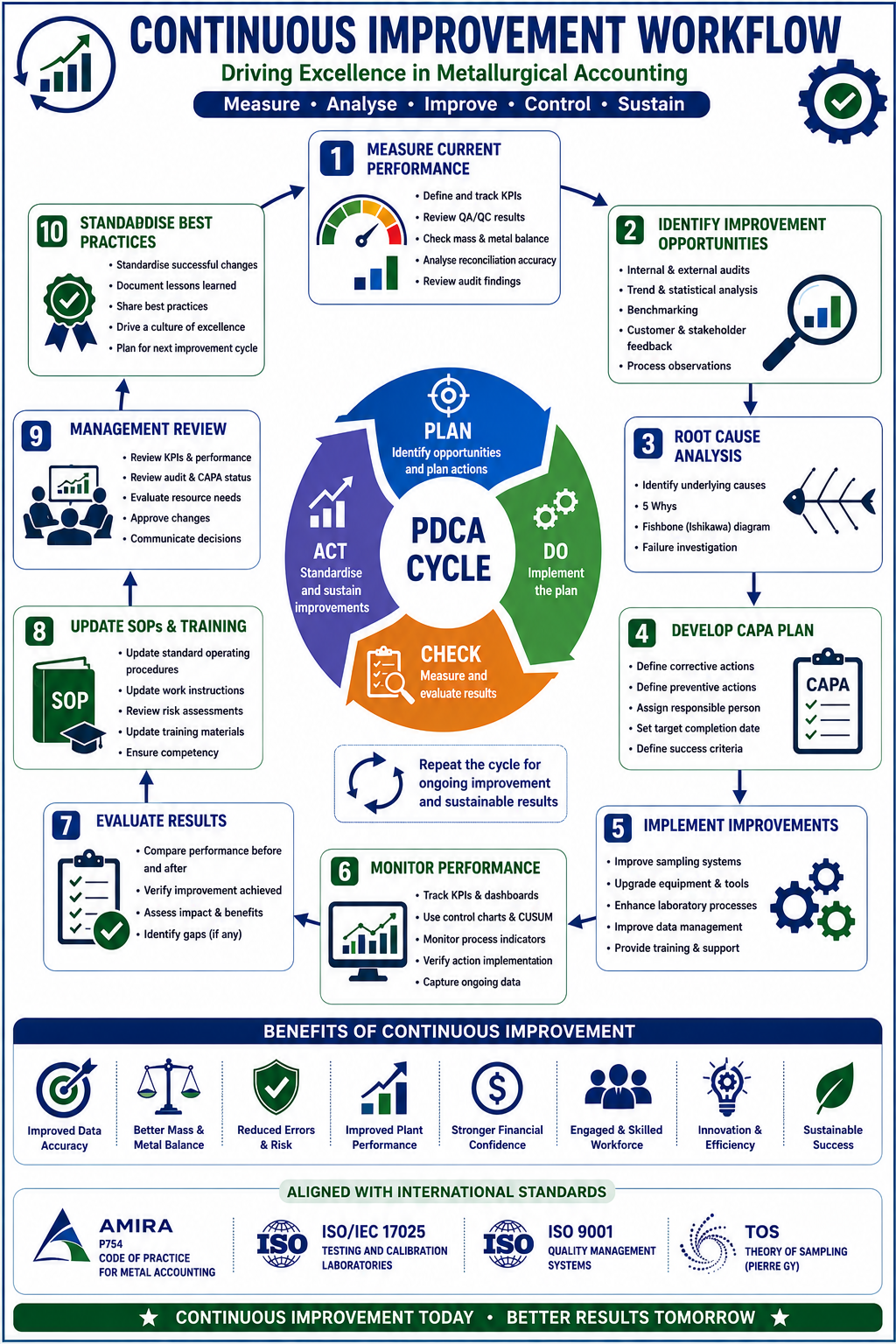
Continuous improvement is a fundamental principle of world-class metallurgical accounting and ensures that sampling, analysis, reconciliation, reporting, and governance processes evolve in response to operational changes, technological advancements, and audit findings.
Rather than treating metallurgical accounting as a static compliance activity, organisations should establish a structured improvement programme that regularly evaluates performance, identifies weaknesses, implements corrective actions, and measures the effectiveness of improvements. This systematic approach enhances data quality, operational efficiency, and financial confidence while supporting sustainable business performance.
A successful continuous improvement programme should be aligned with internationally recognised frameworks such as the **AMIRA P754 Code of Practice for Metal Accounting**, **ISO/IEC 17025**, **ISO 9001**, and the **Theory of Sampling (TOS)**.
Improvements should be driven by objective evidence obtained from sampling audits, laboratory quality control, reconciliation performance, process monitoring, and stakeholder feedback.
### 1. Measure Current Performance Establish baseline performance using measurable Key Performance Indicators (KPIs), including:
* Mass balance closure (%)
* Metal balance accuracy
* Sampling precision
* Laboratory QA/QC performance
* Sample turnaround time
* Reconciliation accuracy
* Audit findings
* Corrective action completion rates Reliable performance metrics provide the foundation for improvement.
### 2. Identify Improvement Opportunities
Use multiple information sources to identify weaknesses, such as:
* Internal audits
* External audits
* QA/QC results
* Customer feedback
* Operational incidents
* Statistical trend analysis
* Benchmarking against industry best practice Root cause analysis should distinguish between symptoms and underlying causes.
### 3. Develop Corrective and Preventive Actions (CAPA) Prepare structured improvement plans that include:
* Identified issue
* Root cause
* Corrective action
* Preventive action
* Responsible person
* Completion date
* Success criteria CAPA programmes should be monitored until fully implemented.
### 4. Improve Sampling Systems
Evaluate opportunities to enhance:
* Sampler design
* Sampling frequency
* Increment collection
* Sample handling
* Sample preparation
* Equipment maintenance
* Automation Representative sampling remains the most important contributor to reliable metallurgical accounting.
### 5. Enhance Laboratory Performance
Continuously improve:
* QA/QC programmes
* Instrument calibration
* Method validation
* CRM usage
* Staff competency
* Laboratory automation
* Data integrity Statistical monitoring tools such as CUSUM and control charts should guide improvements.
### 6. Upgrade Data Management
Strengthen digital systems by:
* Expanding LIMS functionality
* Integrating SCADA and ERP systems
* Improving data validation
* Enhancing cybersecurity
* Automating reporting
* Improving dashboard visualisation Digital transformation improves data quality and traceability.
### 7. Develop Personnel Invest in ongoing:
* Technical training
* Competency assessments
* Professional development
* Cross-training
* Knowledge sharing
* Leadership development
A knowledgeable workforce drives sustainable improvement.
### 8. Monitor Improvement Effectiveness
Track improvement initiatives using:
* KPI dashboards
* Follow-up audits
* Performance reviews
* Trend analysis
* Lessons learned
* Management review meetings
Only improvements that deliver measurable benefits should be standardised.
### 9. Standardise Successful Improvements
Update:
* Standard Operating Procedures (SOPs)
* Training materials
* Work instructions
* Quality manuals
* Risk assessments
* Maintenance plans Standardisation ensures improvements become part of normal operations.
### 10. Repeat the Improvement Cycle
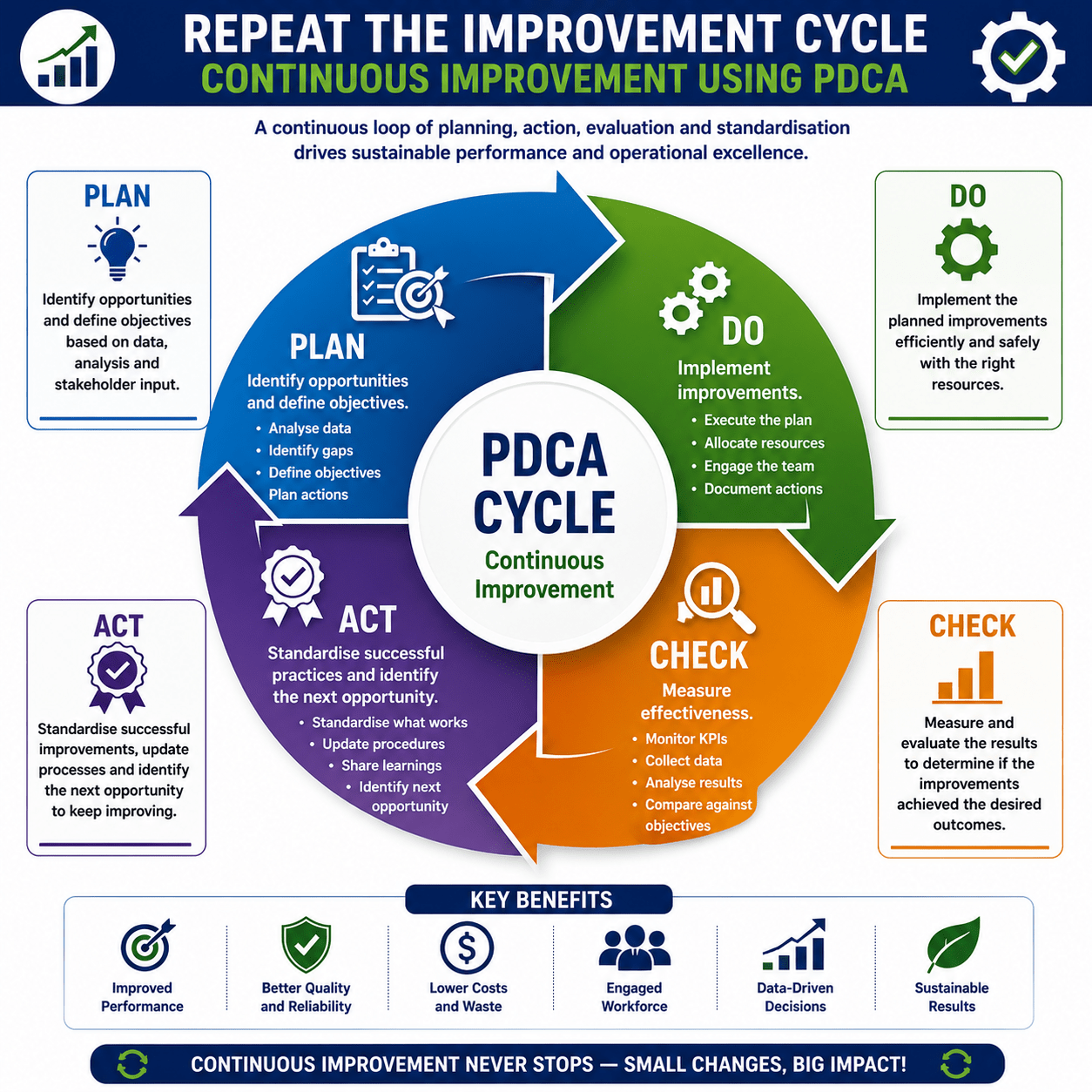
Continuous improvement follows the **Plan–Do–Check–Act (PDCA)** methodology:
* **Plan** – Identify opportunities and define objectives.
* **Do** – Implement improvements.
* **Check** – Measure effectiveness.
* **Act** – Standardise successful practices and identify the next opportunity.
This cycle supports continual enhancement of metallurgical accounting performance.
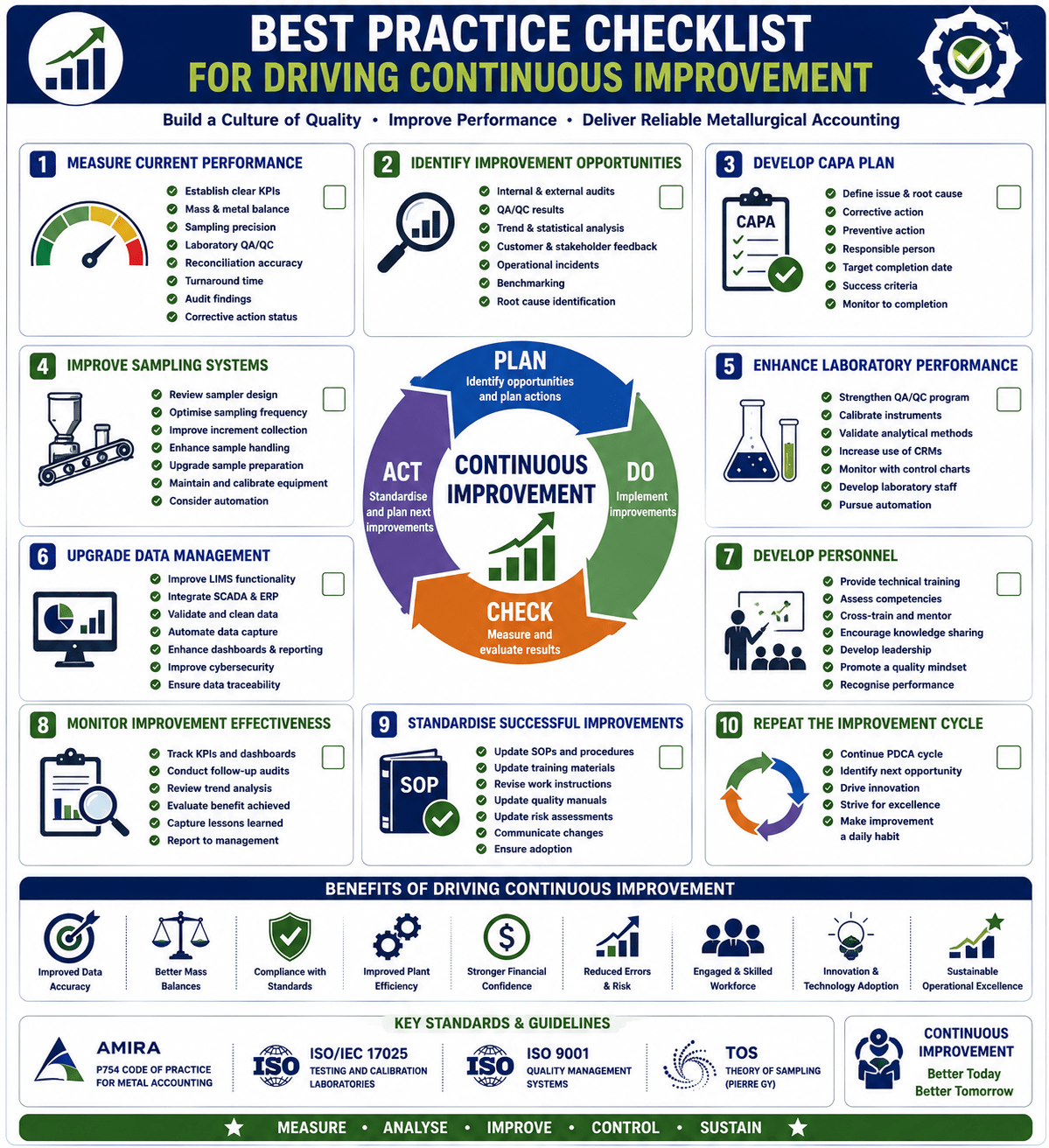
--- ## Benefits of Driving Continuous Improvement * Improves metallurgical accounting accuracy and reliability * Enhances sampling and laboratory performance * Increases reconciliation accuracy * Reduces operational risk and reporting errors * Supports compliance with AMIRA P754, ISO/IEC 17025, ISO 9001, and the Theory of Sampling * Improves plant efficiency and productivity * Strengthens data integrity and governance * Promotes innovation and adoption of new technologies * Builds a culture of quality, accountability, and learning * Supports long-term operational excellence and sustainable business performance